
Last updated November 25, 2026
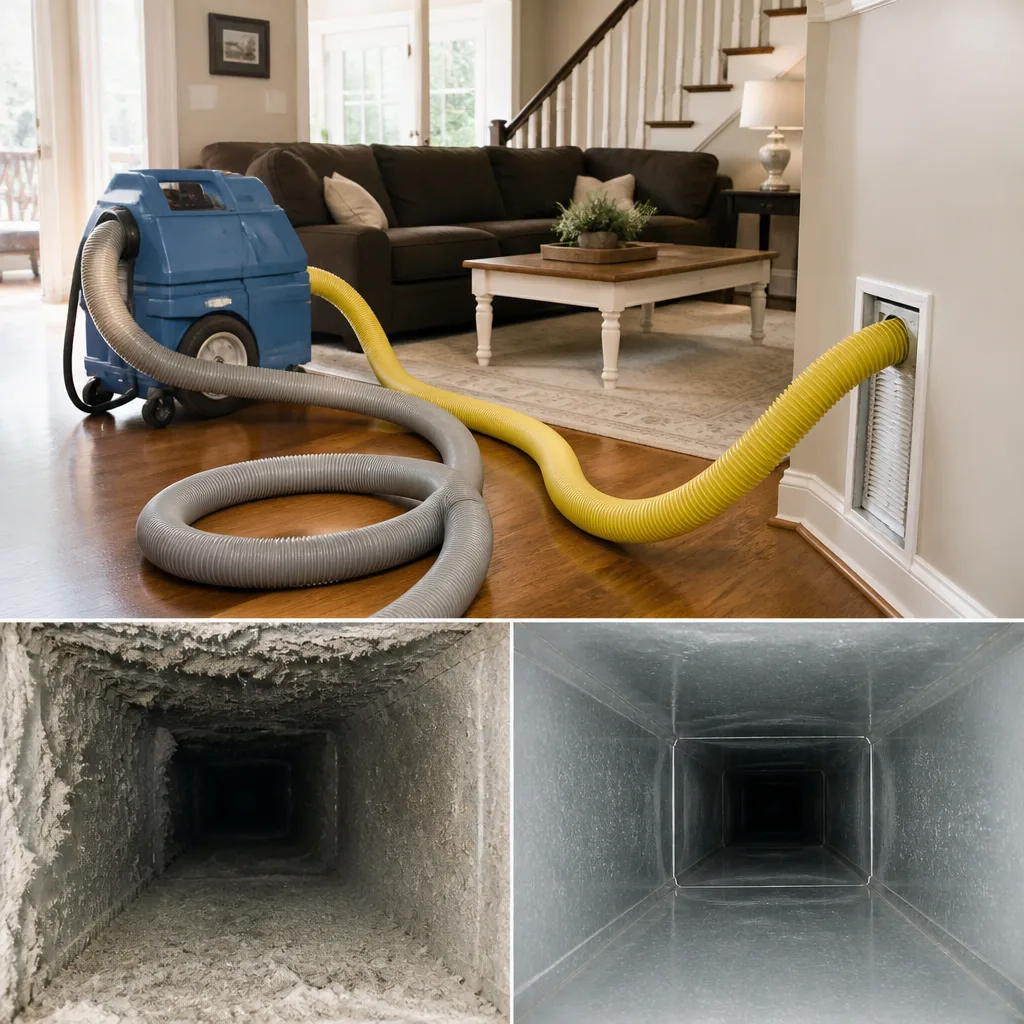 Whole-home duct cleaning
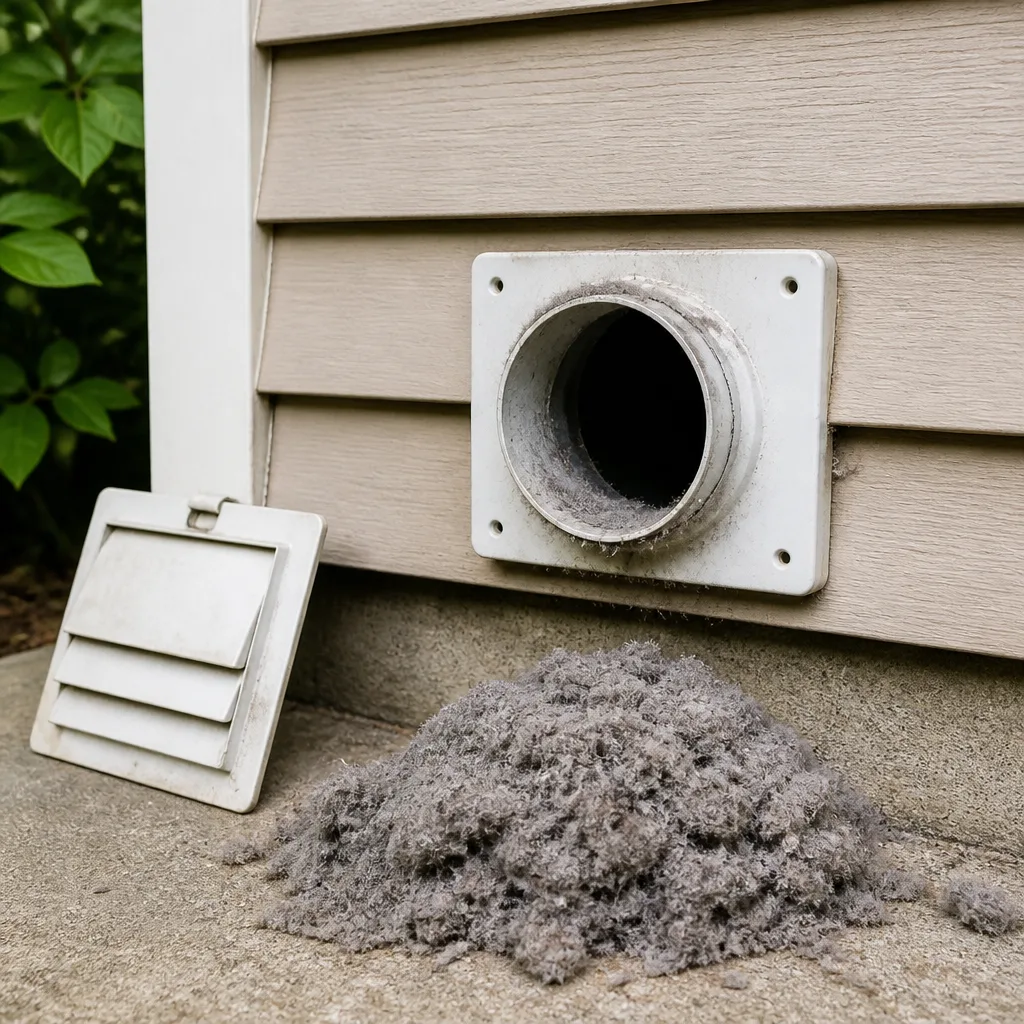 Dryer vent cleaning
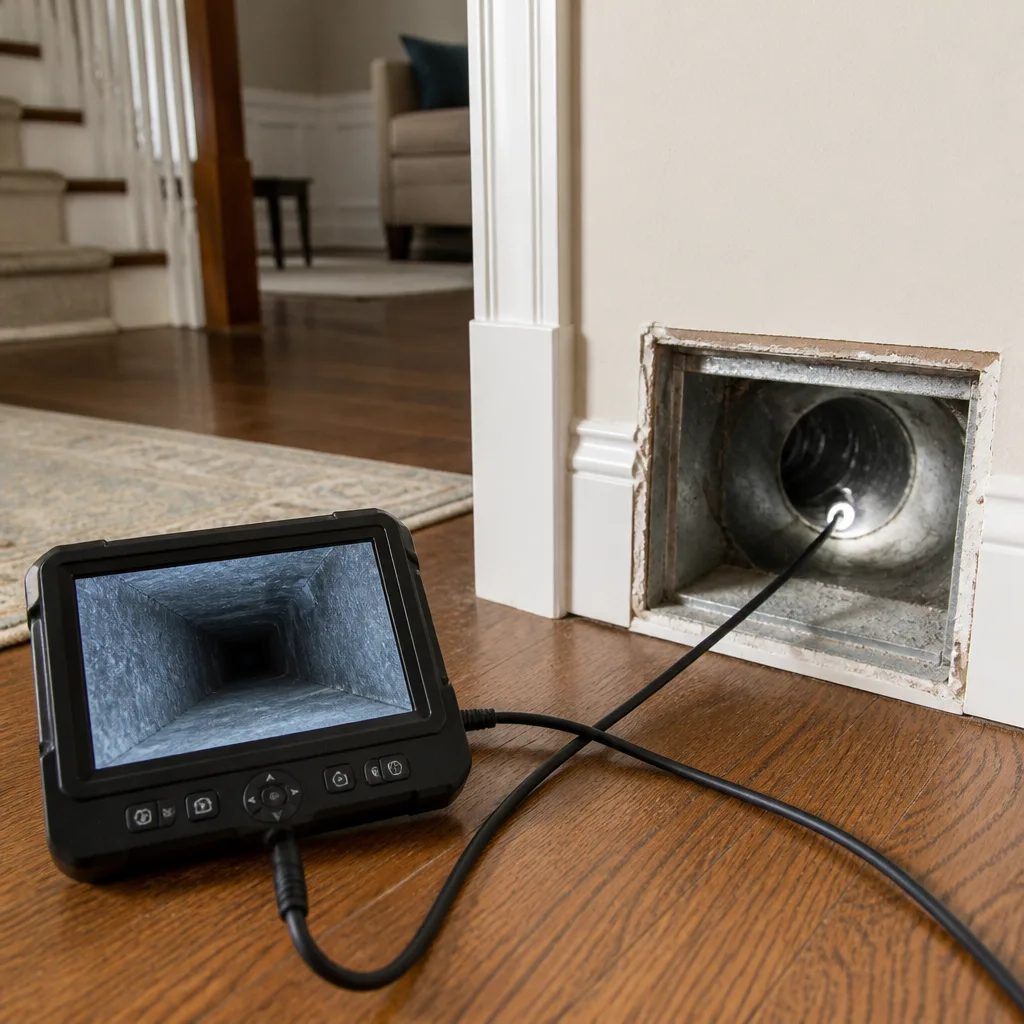 Camera inspection
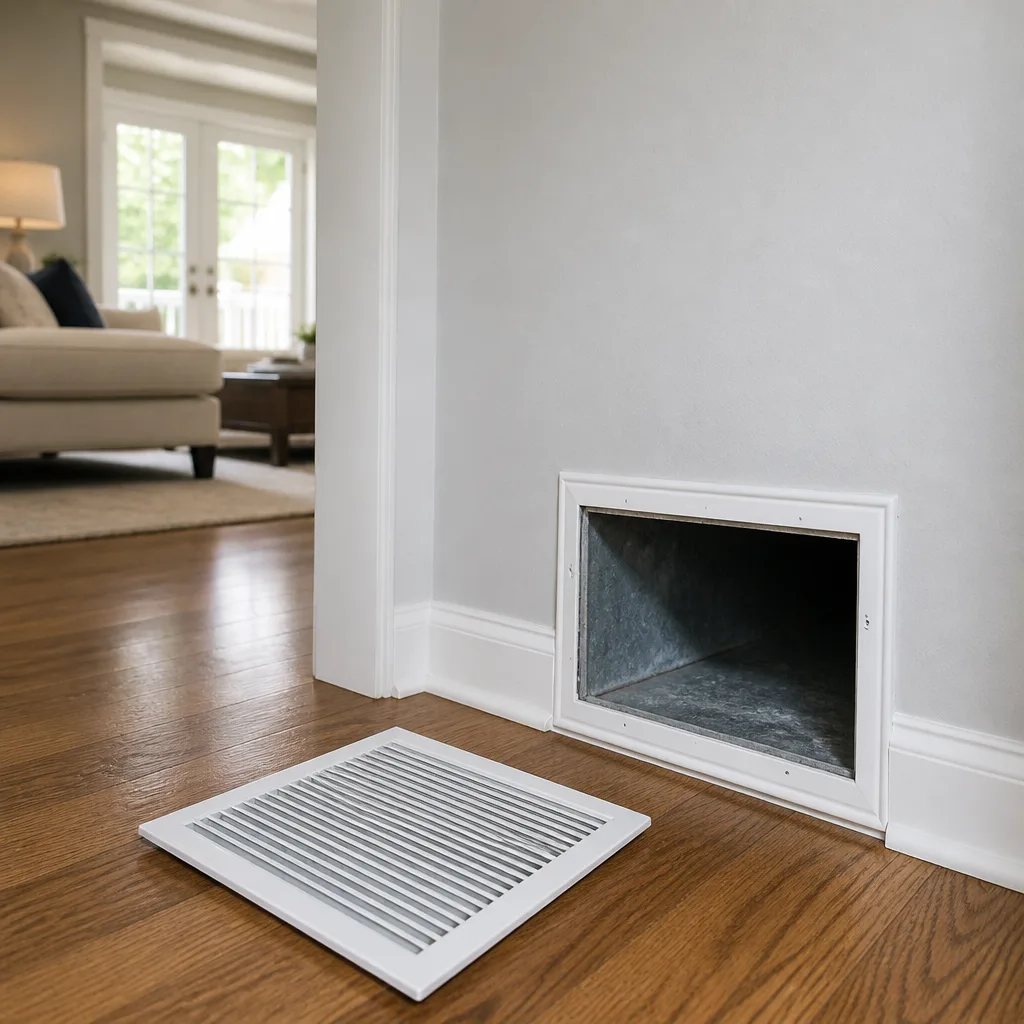 Sanitizing & deodorizing
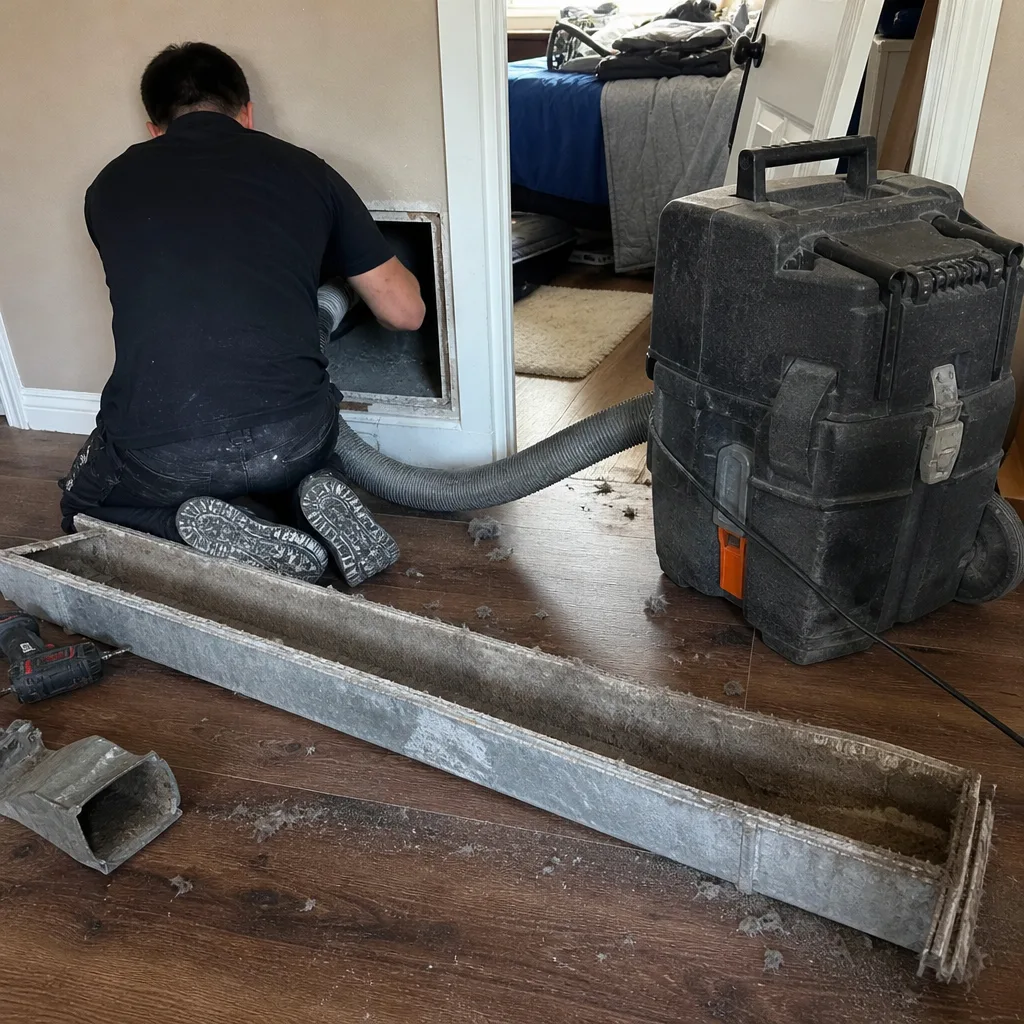
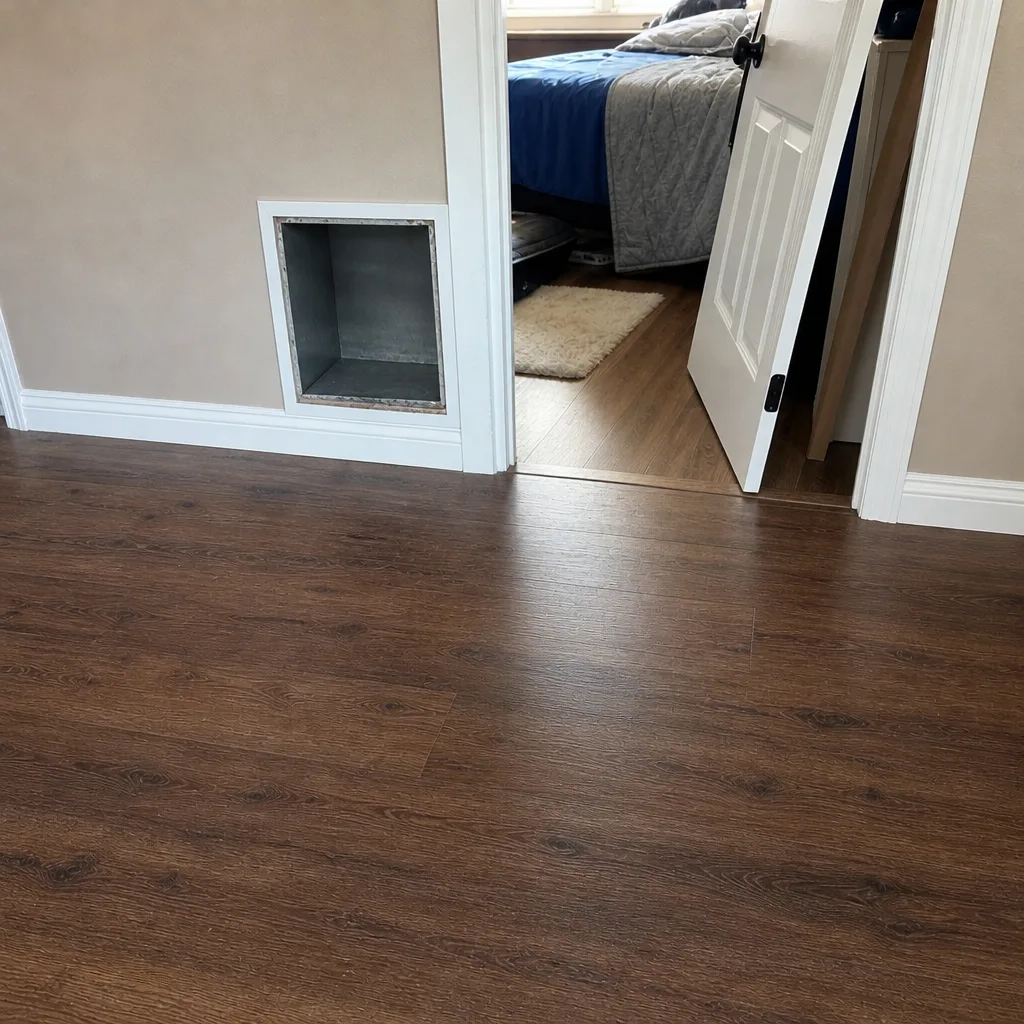
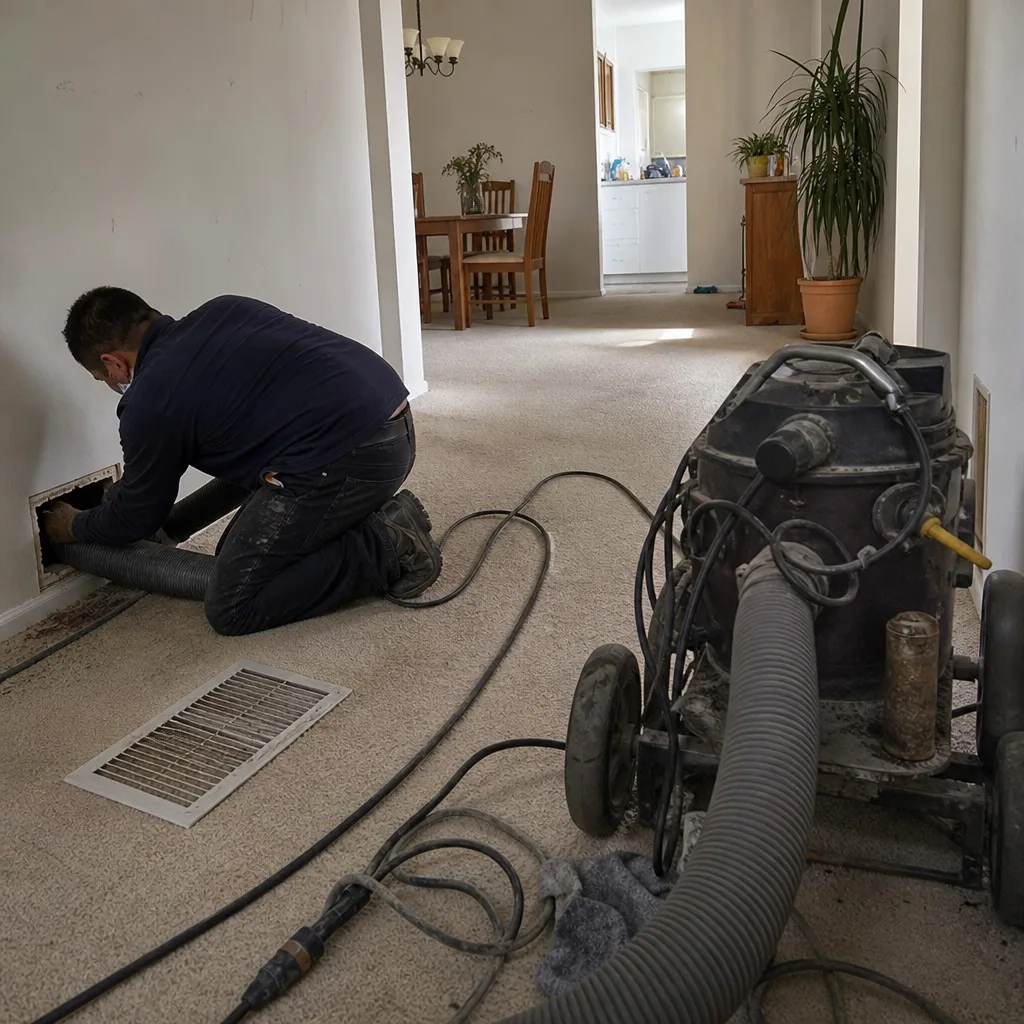
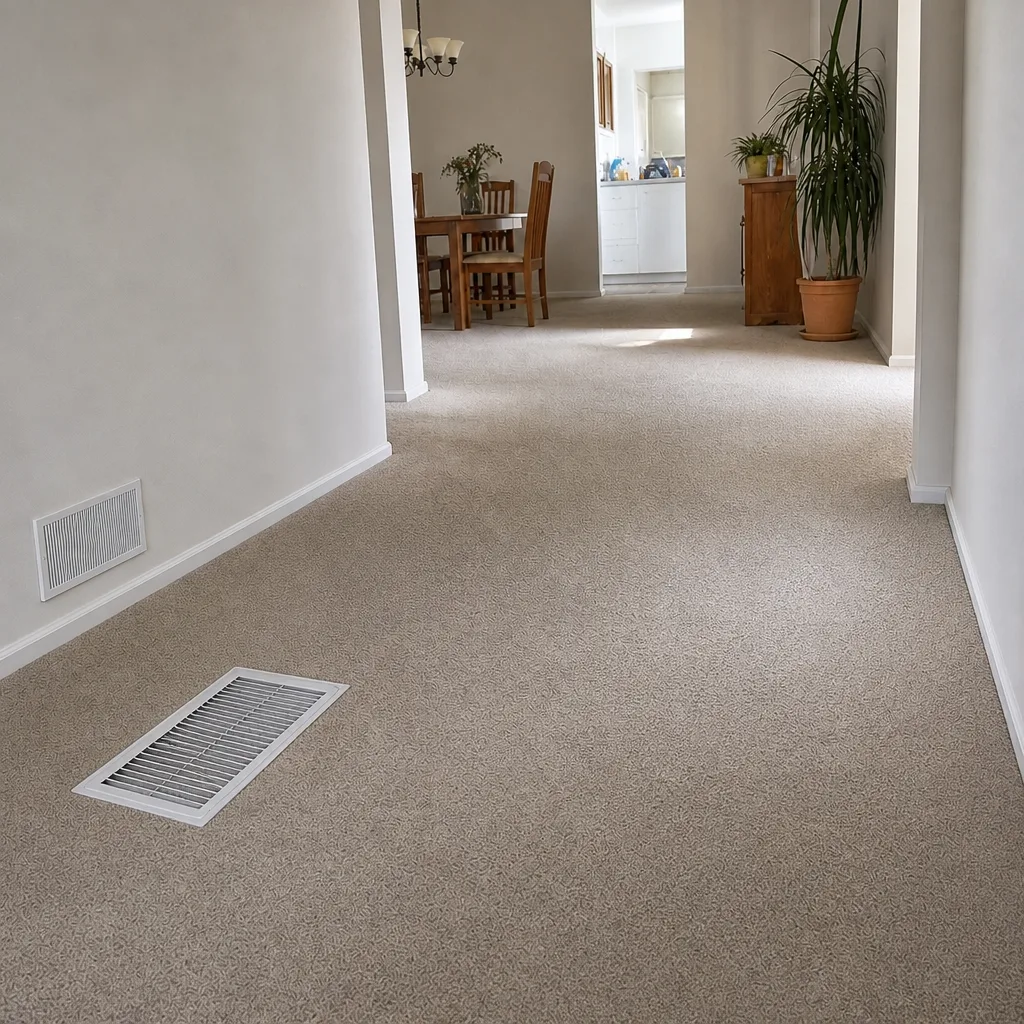
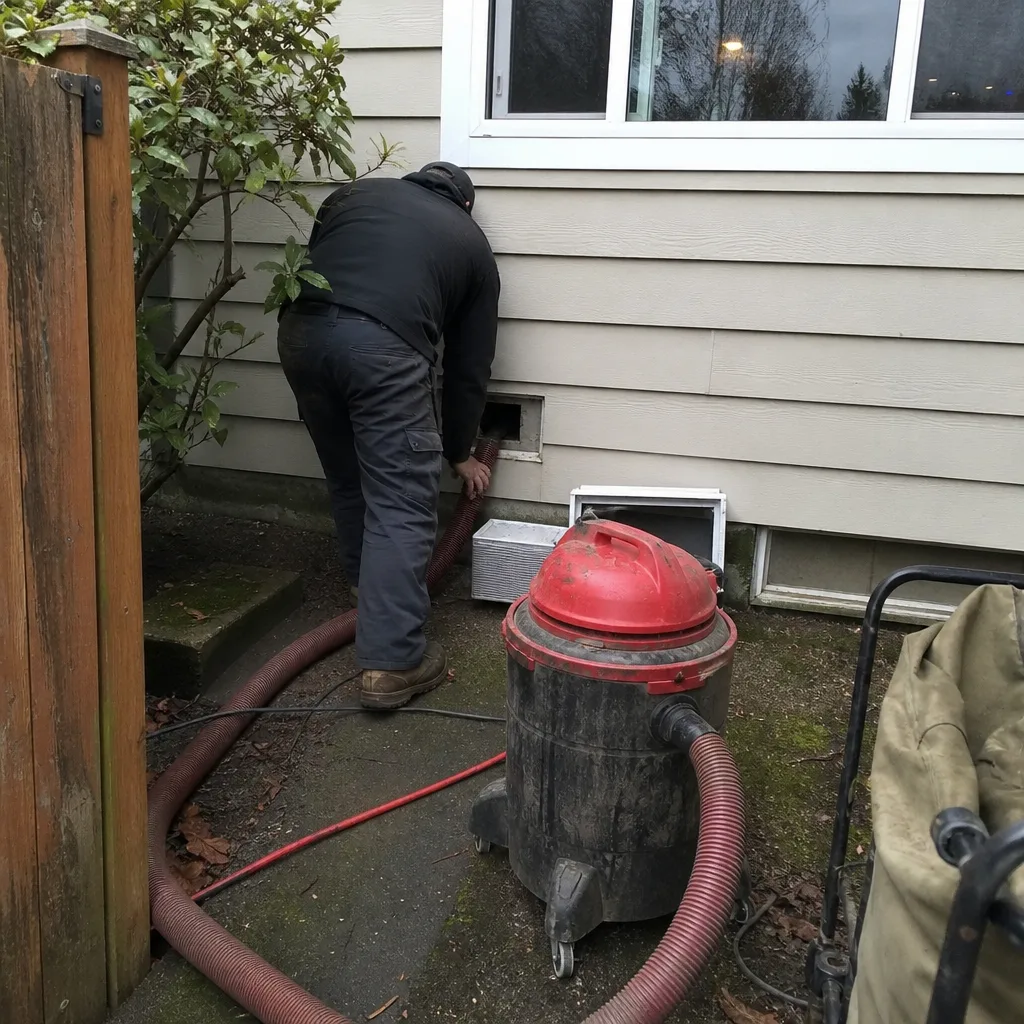
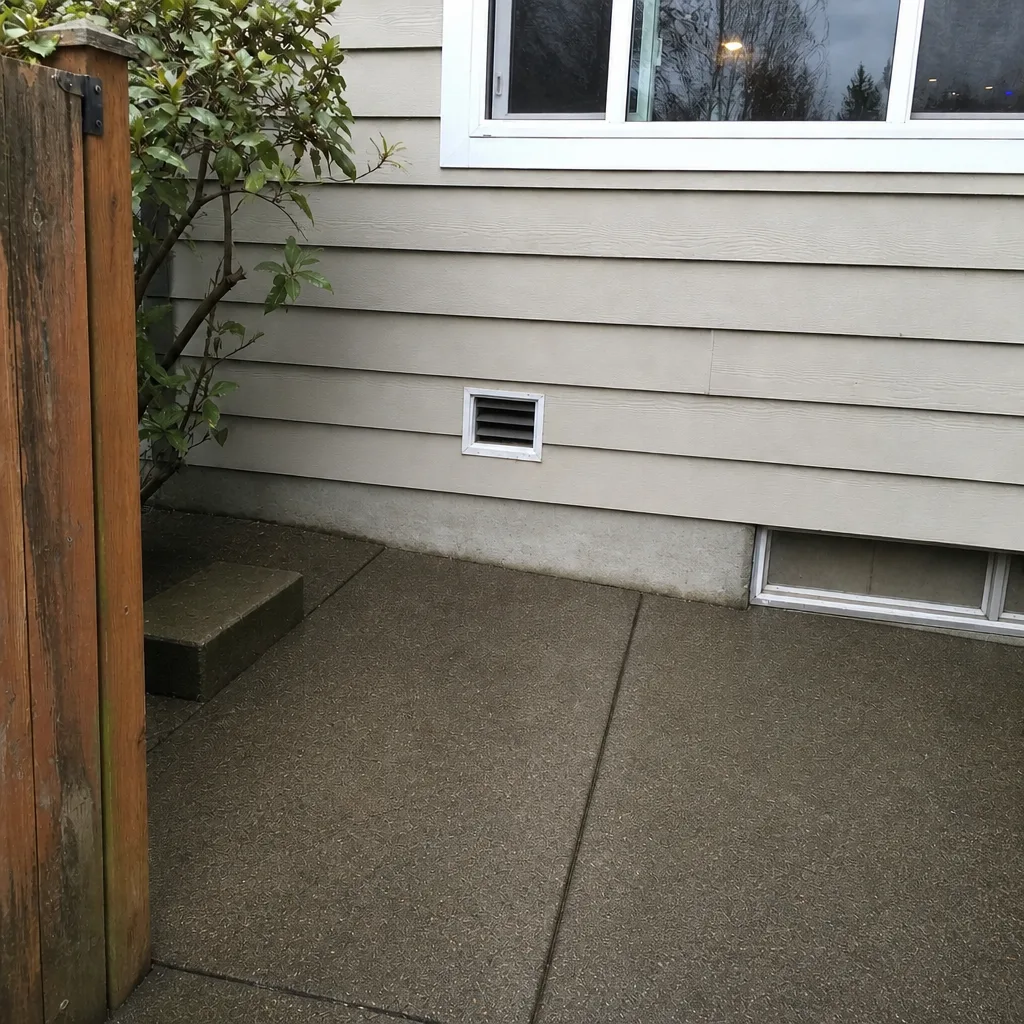
Whole-system duct and dryer vent check with before-and-after photos - you see exactly what came out of your vents
That "$99 whole-house special" is a bait ad - the real number appears once they are in your hallway, or the "clean" is a shop-vac at the register. We photograph the inside of your ducts before and after instead.
DIY vs Professional Air Duct Cleaning: The Renton Homeowner’s Decision Guide
Most homeowners assume the DIY versus professional question comes down to money. It doesn’t. It comes down to physics. The most popular consumer duct-cleaning kit on the market generates roughly 90 CFM of suction. A professional truck-mounted vacuum unit generates 3,000 to 16,000 CFM. That’s not a gap you can close with elbow grease, a longer hose, or a free weekend. It’s a difference in the kind of machine doing the work. In this guide we’ll walk through what DIY genuinely handles well, where it becomes counterproductive, how the real cost comparison looks in the Renton market, and how to inspect your own system afterward with a flashlight to see if you actually improved anything or just pushed the problem deeper.
Styles & brands we work with
- Whole-home duct cleaning
- Dryer vent cleaning
- Camera inspection
- Sanitizing & deodorizing
Quick Answer
DIY air duct cleaning is worth doing for surface-level tasks: vacuuming registers, replacing filters, and dusting accessible return boxes. It is not effective for cleaning the interior of duct runs, because consumer equipment can’t generate the negative pressure required to lift settled debris while a brush dislodges it. For anything beyond the first few inches of a register, professional cleaning is the only method that actually removes contamination rather than redistributing it. Professional service in Renton typically involves a truck-mounted or high-capacity portable vacuum paired with rotary brush and air-whipping tools, plus containment filtration to keep dislodged debris out of your living space.
Table of Contents
- The Physics Problem: Why Suction Alone Doesn’t Clean a Duct
- What DIY Legitimately Handles Well
- When DIY Is Counterproductive in Renton Homes
- The Real Cost Comparison: DIY vs Professional in Renton
- The $12 Flashlight Inspection: Did Your DIY Attempt Actually Work?
- What Professional Equipment Actually Does Differently
- How to Choose a Duct Cleaning Provider in Renton
- Common Mistakes to Avoid
- When to Call a Professional
- Frequently Asked Questions
- The Bottom Line
The Physics Problem: Why Suction Alone Doesn’t Clean a Duct
Duct cleaning works through a combination of two forces acting at the same time: mechanical agitation to break debris loose from the duct wall, and high-velocity negative pressure to carry that debris out of the system before it settles somewhere else. Miss either half and you’re not cleaning. You’re relocating.
Consumer shop-vacs and homeowner duct kits pull around 90 to 200 CFM in ideal conditions, and far less once you attach twenty or thirty feet of narrow hose. That number matters because duct debris isn’t sitting loose on the floor of the duct like sand in a bucket. It’s adhered to the walls, often bonded with moisture, dust mite residue, or cooking oils carried through the return air. A weak vacuum pulling against a bonded layer does almost nothing. A brush attachment on a shop-vac dislodges some of it, but without sufficient airflow behind the brush to capture the loosened material, that debris tumbles further down the run and settles in a joint, a transition fitting, or the plenum above your furnace.
This is why we emphasize source-removal cleaning as a concept, not just “vacuuming the ducts.” The professional standard is contact agitation plus containment. Rotobrush and Nikro systems we use pair a rotary brush head or forward-air nozzle with a vacuum source strong enough to keep the loosened material moving toward the collection point. Abatement Technologies filtration equipment captures airborne particulate at the work zone so dislodged contaminants don’t recirculate through the home while the job is happening. That last part is often what homeowners notice first. A proper job doesn’t leave a haze in the air.
In Renton, the housing stock adds a wrinkle. Many homes built in the 1970s through 1990s use flexible duct runs through attic and crawl spaces, and those runs have more surface area, more joints, and more places for debris to collect than rigid metal trunk lines. Weak suction that would be marginal on a short metal run becomes essentially ineffective on a twenty-foot flex run with three elbows. The physics don’t get more forgiving because the ducting is harder to clean. They get less.
What DIY Legitimately Handles Well
We’re not going to tell you every DIY effort is wasted. It isn’t. There are four tasks homeowners in Renton can and should do, and doing them well makes a professional cleaning more effective when you do schedule one.
- Register and grille cleaning. Remove the supply and return grilles with a screwdriver, wash them in a utility sink with warm water and a mild degreaser, dry them fully, and reinstall. Dust and pet hair accumulate on the face of grilles faster than anywhere else in the system, and washing them takes ten minutes per grille. This is the highest-value DIY task on the list.
- Filter replacement. Change the filter at the furnace or air handler on the schedule the manufacturer recommends. A clogged filter chokes airflow, raises static pressure in the system, and makes everything downstream dirtier faster. Match the MERV rating to what your equipment is rated for. Higher isn’t always better, and an oversized MERV rating on an older blower can reduce airflow enough to cause problems.
- Accessible return-box dusting. The return air box, the plenum area right where the return duct drops into the furnace, often collects a visible layer of dust. If it’s reachable with a vacuum wand and a microfiber cloth, wipe it down. Don’t reach into the duct run itself. Just the accessible box.
- Dryer vent visual inspection. Disconnect the dryer, look into the vent collar behind the appliance with a flashlight, and check the exterior termination for lint buildup and a functioning damper. If you see lint accumulation deeper than the first few inches, or the exterior flap isn’t opening fully with the dryer running, that’s a sign of a blocked vent. Dryer vent cleaning is a dryer vent cleaning job at that point, and it addresses a documented fire risk, not a cosmetic one.
What those four tasks share is that they all work on accessible surfaces. The moment the work requires you to reach past the first elbow or into a duct run more than a few feet, the physics from the previous section take over and DIY hits its ceiling.
When DIY Is Counterproductive in Renton Homes
There are scenarios where a DIY attempt doesn’t just underperform. It makes things worse, and it can damage components in the process. Three of these come up often in Renton.
Flex duct with visible mold
If you can see dark spotting or a musty odor near a register, and the duct serving it is flexible (the foil-wrapped or wire-reinforced plastic type common in attic runs), stop and call. Flex duct has an internal liner that’s difficult to clean and easy to tear with a shop-vac brush or a rigid wand. Agitating mold spores without containment filtration aerosolizes them into the living space, which is the opposite of what you want if anyone in the home has asthma or allergies. In our experience the appropriate response is professional cleaning with HEPA-level filtration, followed by sanitizing and, in some cases, replacement of the affected run rather than cleaning.
Wildlife intrusion
The Pacific Northwest climate and the wooded areas around Renton’s hillside neighborhoods make duct systems a target for rodents and, occasionally, birds or squirrels that get in through a failing exterior termination or a loose connection in the attic. Droppings and nesting material in a duct are a genuine health concern, not a dust concern. Vacuuming them with a shop-vac without containment is one of the worst things you can do in a home with an occupied duct system. This is a professional job from start to finish, including a sanitizing step afterward.
Post-renovation debris
Drywall dust, sawdust, and construction debris settle into the ducts during a remodel and then get pushed through the home the first time the system runs at full load. Drywall dust is fine, abrasive, and it fouls blower wheels and evaporator coils. A shop-vac can’t move enough air to pull that dust out of a long run, and the abrasive material can damage the vacuum’s motor if you try. Professional cleaning after a remodel is standard for a reason. It’s also why you’ll see duct cleaning recommended as part of a punch list before the family moves back in.
There’s a fourth scenario worth naming: any system where the DIY attempt itself involves disconnecting flex duct and re-taping it. If the tape job isn’t done correctly, you introduce a leak into the system. A leaking return, especially in an attic, pulls unconditioned air and attic dust into the living space. Seal the job right or don’t open it up. That’s the “we seal what we clean” principle, and it’s why duct repair and sealing belongs in the same visit as cleaning.
The Real Cost Comparison: DIY vs Professional in Renton
Homeowners ask about this comparison constantly, and the honest answer is that DIY looks cheaper on the receipt and often isn’t cheaper once you count time, consumables, and risk. Here’s how the numbers actually break down in the Renton market.
| Cost item | DIY approach | Professional approach |
|---|---|---|
| Equipment | $40-$200 for a consumer duct kit or a shop-vac plus hose attachments | Included in the service price |
| Consumables | $10-$30 for filters, cleaning solution, tape | Included |
| Time investment | 4-8 hours for a typical Renton home, most of it spent on a ladder in a tight attic | 2-4 hours on site |
| Risk of damage | Real. Torn flex liner, disconnected runs, damaged blower wheel from abrasive debris | Held by the provider’s workmanship practices |
| Verification | Limited. You can’t see inside the runs | Before-and-after photos provided |
| Typical whole-system professional range | Not applicable | Prices vary by home size, number of runs, and system condition; a written estimate sets the final price |
What that table doesn’t capture is the second-order cost. If a DIY attempt dislodges debris into the plenum and the blower wheel becomes unbalanced, the repair bill dwarfs any savings. If a flex run is torn during cleaning, the run needs to be replaced, not repaired. Those are the scenarios that turn a $150 kit into a $900 problem.
The professional side deserves an honest caveat too: quotes vary widely, and the low-price provider is often the one who runs a shop-vac through your registers and calls it done. That’s a conversation worth having in detail when you air duct cleaning service. Ask what equipment they use, whether containment filtration is part of the job, and whether they provide before-and-after photos. A specialist will answer those three questions without blinking.
For a full breakdown of what a proper job involves in our service area, the Renton Air Duct Cleaning Co main page is a reasonable starting place. For homeowners comparing us to a competitor, the fairest comparison is equipment and process, not headline price.
The $12 Flashlight Inspection: Did Your DIY Attempt Actually Work?
You’ve cleaned what you could reach. Now you want to know if it worked. Here’s a simple inspection method that costs almost nothing and tells you more than a visual check of the register grille.
- Get a bright flashlight with a narrow beam. A compact LED with a focused hotspot is ideal. You don’t need a borescope. A $12 flashlight is enough for this check.
- Turn the HVAC system off at the thermostat. You want the system quiet so you can see settled dust and so you don’t get a face full of moving air.
- Remove a supply register grille in a room you cleaned most thoroughly. Use a screwdriver. Set the grille aside carefully.
- Shine the light into the duct run at a low angle. Low angle is the key. Dust hides in reflected light. It shows up in raking light, meaning the beam is nearly parallel to the duct wall.
- Look for two things: a uniform light dust film versus thick accumulations, and any debris visible at the first joint or transition. A light uniform film after cleaning is normal. Thick adhered accumulations, clumps, or visible debris piled at the first joint mean the cleaning didn’t address the run.
- Repeat in two more supply registers and one return. Consistency across locations tells you more than one spot check.
- Run the system for ten minutes with the thermostat fan set to ON, then look at the register faces. New dust settling quickly on the grille faces after a “cleaning” is a sign that material is still being pushed out of the system.
One more diagnostic: a musty odor that was mild before the cleaning and stronger after is a sign that moisture or biological growth was agitated. Wipe a white paper towel lightly inside the first few inches of the duct. Rust-colored staining or dark smudging on the towel points toward professional intervention, not another round of DIY.
What Professional Equipment Actually Does Differently
The equipment difference isn’t marketing. It’s the reason the physics work at all.
- Suction capacity. Professional truck-mounted units pull 3,000 to 16,000 CFM depending on configuration. High-capacity portables built for duct cleaning pull several times what a shop-vac does. The gap matters because airflow needs to exceed what the debris weight and adhesion can resist.
- Contact agitation. Rotary brush systems like the Rotobrush platform feed a spinning brush head through the duct run, contacting the walls to break bonded debris loose from every surface at once. Air-whip systems from Nikro use high-velocity forward-air nozzles that blast the walls as the tool advances. A shop-vac brush attachment is a small stationary brush and a weak vacuum. It’s the same idea with a fraction of the capability.
- Containment filtration. On every job we run Abatement Technologies air-filtration equipment to capture airborne particulate at the work site. This is the difference between cleaning a system and redistributing its contents into the room your family is sitting in.
- Source removal versus surface cleaning. Professional cleaning removes material from the duct, the plenum, the blower, and the evaporator coil, up to the point where each component is clean. A surface-level shop-vac pass addresses none of those.
That capability is also why cleaning and repair belong together. We seal what we clean, and that means duct repair and sealing is part of a specialist’s job, not a separate contractor’s. If a joint is leaking, cleaning it and leaving the leak is a short-term fix. The specialist framing is the full air pathway: ducts, HVAC cleaning, dryer vent, and the air quality treatment that follows. If you’re going to hire a specialist for one leg of that pathway, hiring one who handles all four is usually the cleaner decision.
Our technicians have up to 15 years of experience, and in that time the pattern we’ve seen repeatedly is that systems introduced to professional cleaning once every few years stay dramatically cleaner and run more efficiently than systems that never get attention. That’s not a sales pitch. It’s what the equipment and the data show.
How to Choose a Duct Cleaning Provider in Renton
The quality spread among providers is wide. A few questions separate the specialists from the generalists.
- What equipment do they use? A provider who names their systems (Rotobrush, Nikro, Abatement Technologies, similar) and can explain why they chose them is a specialist. A provider who says “truck-mounted” without naming a system is worth a follow-up question.
- Do they use containment filtration? If the answer is no, they’re agitating dust into your home during the job. That’s a red flag for anyone with respiratory concerns.
- Do they offer repair and sealing? Cleaning and sealing belong together. If a provider can only clean, a leaking joint stays leaking.
- Do they provide before-and-after photos? Photos are the single best answer to the “did they actually do the work” question.
- Are they licensed and insured as their state requires? In Washington, verify the license and ask for a certificate of insurance. Insurance coverage is a straightforward ask and a specialist will provide it without delay.
- Do they handle the full scope, or sub it out? A provider who can address ducts, HVAC components, dryer vents, and air quality in one visit gives you one point of accountability. A general home-services provider with duct cleaning as a side offering usually can’t.
For readers who want to see how a specialist service is described before making calls, the dryer vent cleaning page and the air duct cleaning page walk through the process in detail. Skim them before you call, and use the questions above to compare what you hear.
Common Mistakes to Avoid
- Assuming a cheap quote means a good deal. A low price almost always means less equipment, less time, or both. The provider who arrives with a shop-vac and two hours of labor is charging you for the same job with a fraction of the capability. Ask what equipment they use before you book.
- Cleaning ducts without replacing the filter. A dirty filter reintroduces dust immediately. Change it the same day the cleaning is done, and note the date on the filter frame with a marker so you don’t lose the schedule.
- Relying on a shop-vac in a flex-duct system. Flex duct liner tears when a rigid wand or the wrong brush is forced through it. A torn liner becomes a permanent contamination trap, and the fix is replacement, not another cleaning.
- Ignoring the dryer vent. Dryer vent cleaning is not a maintenance upsell. It addresses a documented leading cause of residential house fires, and in Renton homes with long vent runs to the exterior, blockages are more common than most homeowners expect.
- Skipping the return side. Most DIY efforts focus on supply registers because they’re visible. The return side is often where the heaviest accumulation is, and the return plenum and the blower compartment usually need the most attention.
- Not asking for before-and-after photos. Images are the cheapest way to verify the work. If a provider can’t or won’t provide them, treat that as a data point.
- Trusting a coupon price without confirming what it covers. A low headline number that becomes a larger invoice once the technician is on site is a pattern worth guarding against. Ask for one flat price for the full system, agreed before work starts.
When to Call a Professional
Call a professional when the system has visible mold growth at a register or a musty odor that worsens when the system runs. Call when wildlife has been in the attic or a duct, when a renovation just wrapped and drywall dust is in the air, when a dryer takes noticeably longer to dry a load than it used to, or when the flashlight inspection from earlier shows thick, adhered accumulation deeper in the runs. Call if anyone in the home has asthma or allergies and the symptoms track with system activity. And call if you’ve just completed a DIY attempt and want a verification pass to confirm the system was actually cleaned rather than redistributed.
Renton Air Duct Cleaning Co offers free estimates in Renton and can walk you through the scope before any work begins. Call (855) 337-1999. We answer 24/7. Fast dispatch from 7am to 7pm, Sunday through Friday.
Frequently Asked Questions
The cost depends on home size, the number of duct runs, the ducting material, and the condition of the system. Most Renton homes fall into a range that reflects a full-system clean with containment filtration and before-and-after photos. Call (855) 337-1999 for an exact quote. Estimates are free, and the written estimate sets the final price.
No. A shop-vac generates a fraction of the airflow a professional duct cleaning system does, and it lacks the contact agitation needed to break bonded debris loose from the duct walls. It’s effective on registers, grilles, and accessible return boxes, but not on the interior of duct runs. For anything past the first elbow, professional cleaning is the only method that removes contamination rather than moving it.
It’s worth it for the surface-level tasks: washing grilles, replacing filters, and dusting accessible return boxes. Those jobs are real and they help. But the interior of the runs is the same physics problem regardless of home size, and a smaller home doesn’t lower the suction requirement.
Most homes don’t need it on a fixed schedule. Every few years is reasonable for a typical Renton home, sooner if there’s a renovation, wildlife intrusion, visible mold, or a household member with respiratory concerns. Filter changes and register cleaning happen far more often than professional duct cleaning and are the tasks that matter most between professional visits.
Cheaper quotes usually reflect cheaper equipment, less time on site, or a narrower scope. A provider using a shop-vac and surface tools can charge less because they’re doing less. A provider using professional-grade systems with containment filtration is charging for the actual capability. Ask what equipment they use before you decide. Call (855) 337-1999 for an honest comparison.
Ask for before-and-after photos of your own system. Run the flashlight inspection a few days after the cleaning and look for the difference between a light uniform film and thick accumulation. And check the register faces after the system has run for a while – new dust settling quickly is a sign that material is still being pushed out of the system.
The Bottom Line
The DIY versus professional question is a physics question more than a budget question. Consumer equipment can clean the surfaces you can reach, and it should – register cleaning, filter replacement, and return-box dusting are genuinely useful tasks. What it can’t do is generate the negative pressure and contact agitation to remove bonded debris from inside a duct run, and in the three Renton scenarios covered above (flex duct with mold, wildlife intrusion, post-renovation debris) it can make a real problem worse. Use the flashlight inspection to judge your own results. When the answer is “still dirty,” that’s the signal to call a specialist.
Renton Air Duct Cleaning Co offers free estimates and full air-pathway service – duct cleaning, duct repair and sealing, dryer vent cleaning, HVAC cleaning, and air quality treatment – in a single visit. We use professional-grade Rotobrush and Nikro systems and Abatement Technologies filtration on every job. Call (855) 337-1999. We answer 24/7. Fast dispatch from 7am to 7pm, Sunday through Friday. One flat price per system, agreed before work starts, and before-and-after photos so you can see the difference.
Written by the team at Renton Air Duct Cleaning Co.
See the difference
 Before
 After
 Before
 After
 Before
 After