
Last updated November 25, 2026
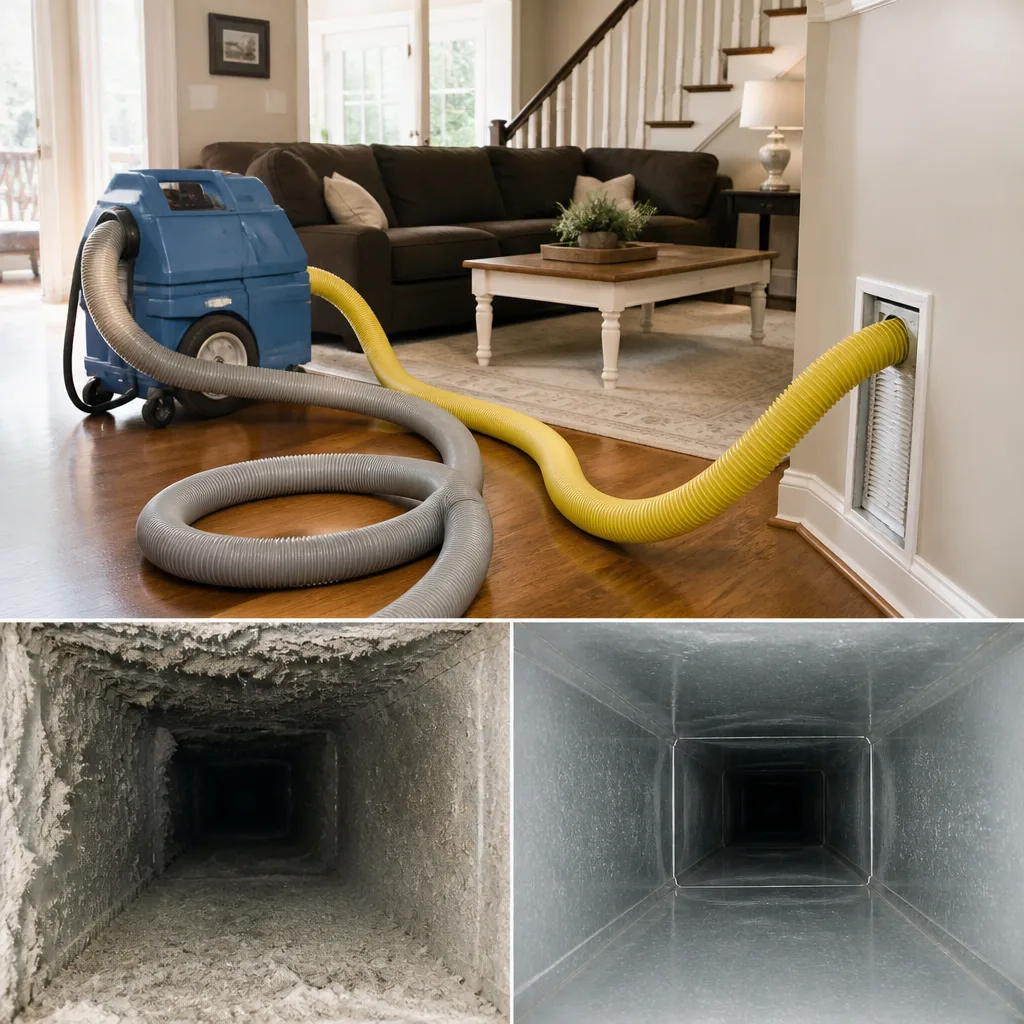 Whole-home duct cleaning
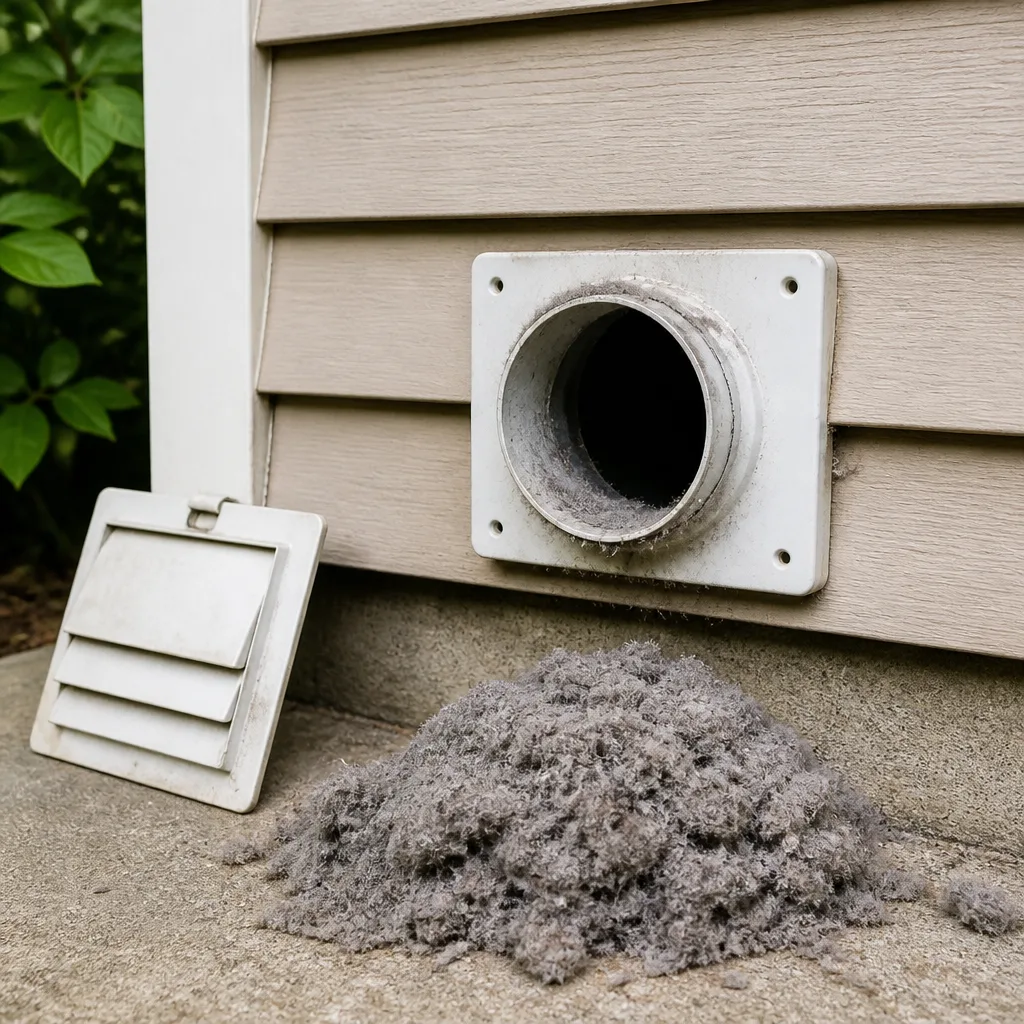 Dryer vent cleaning
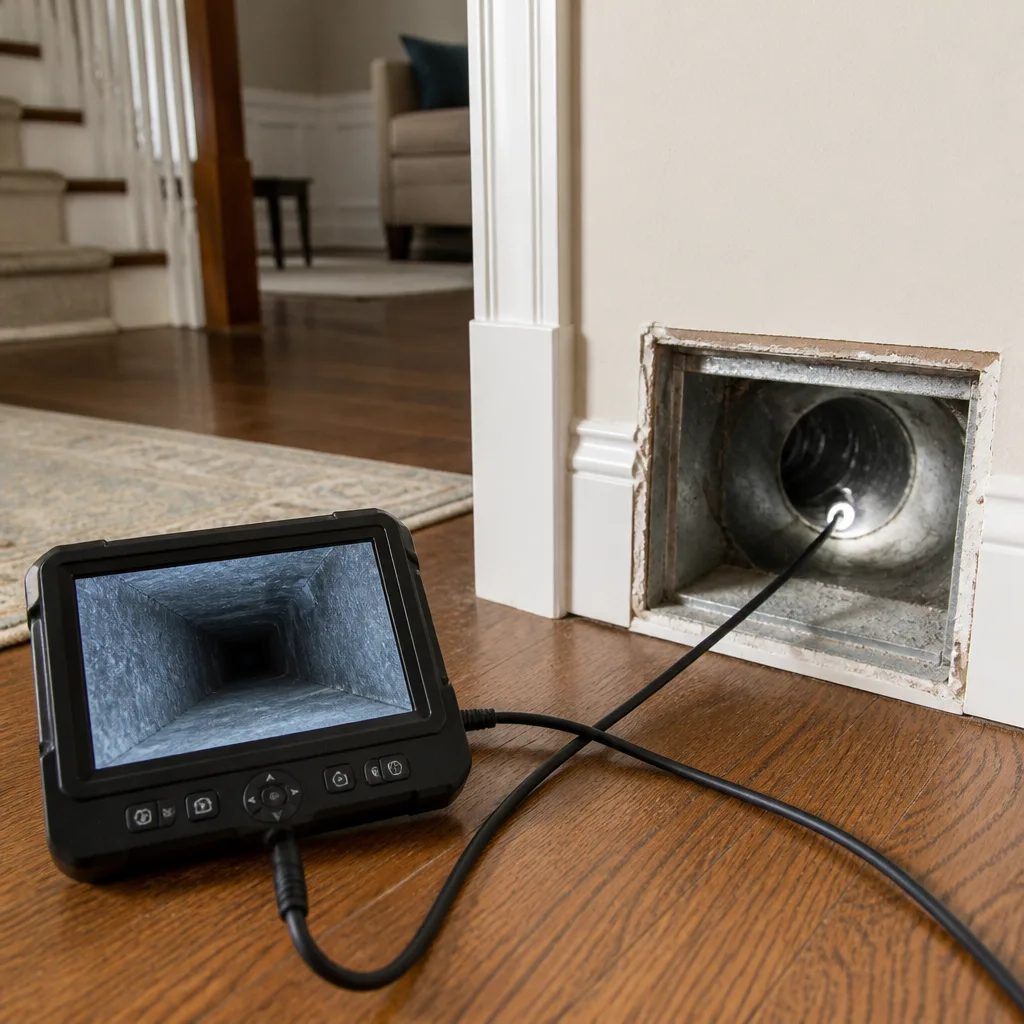 Camera inspection
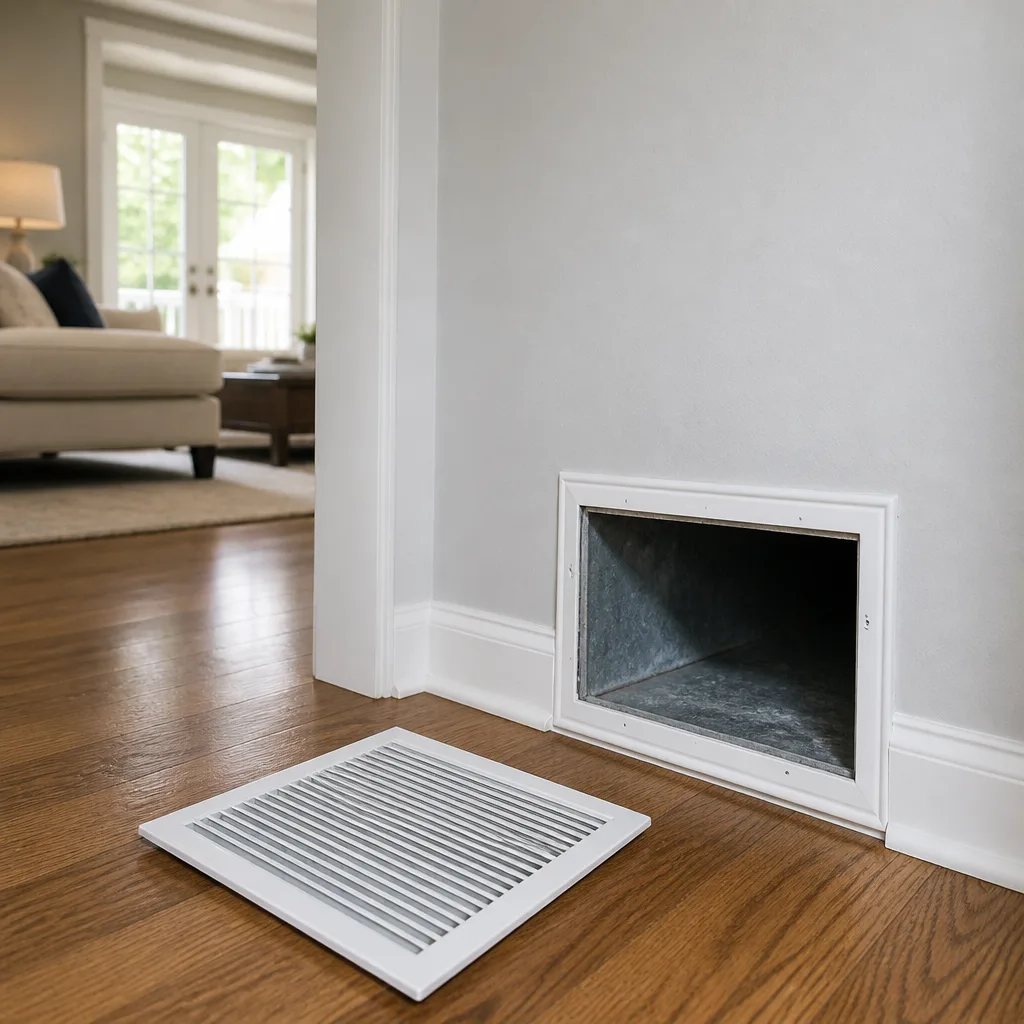 Sanitizing & deodorizing
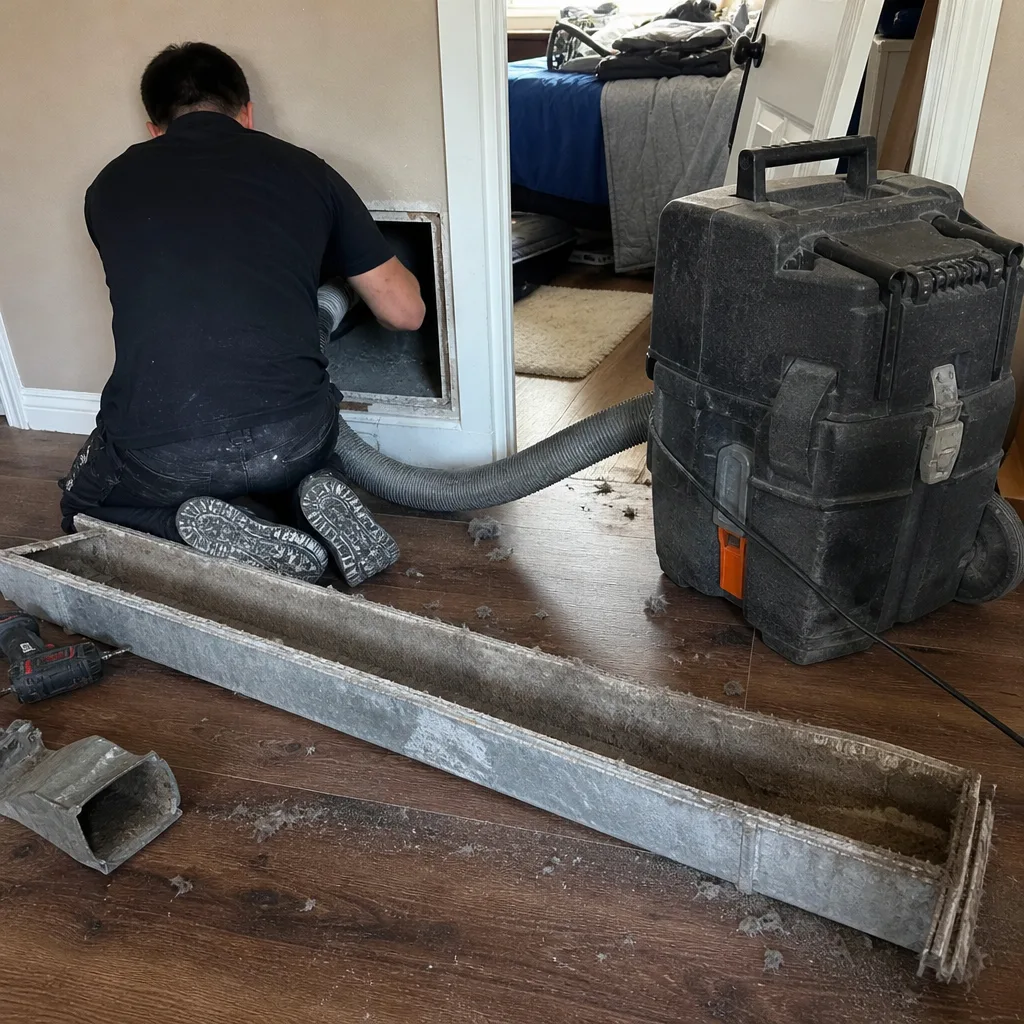
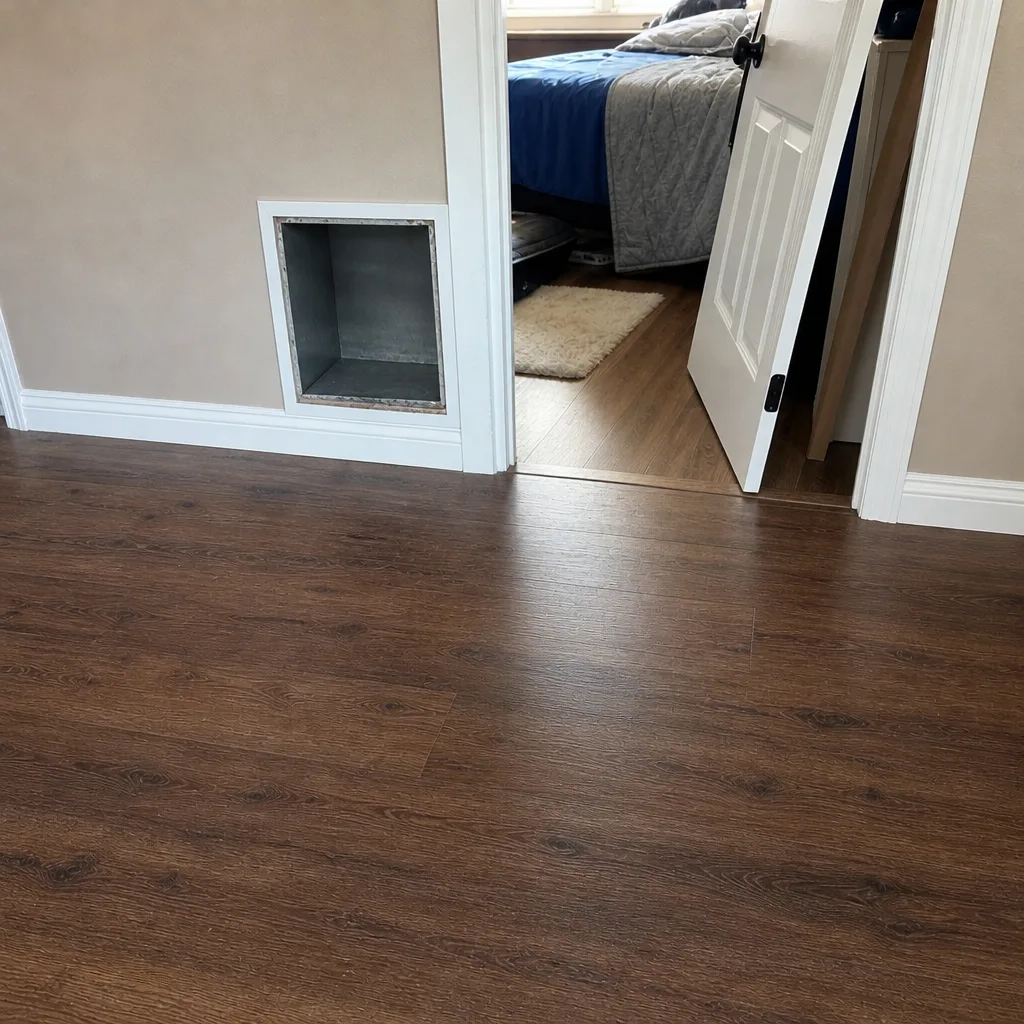
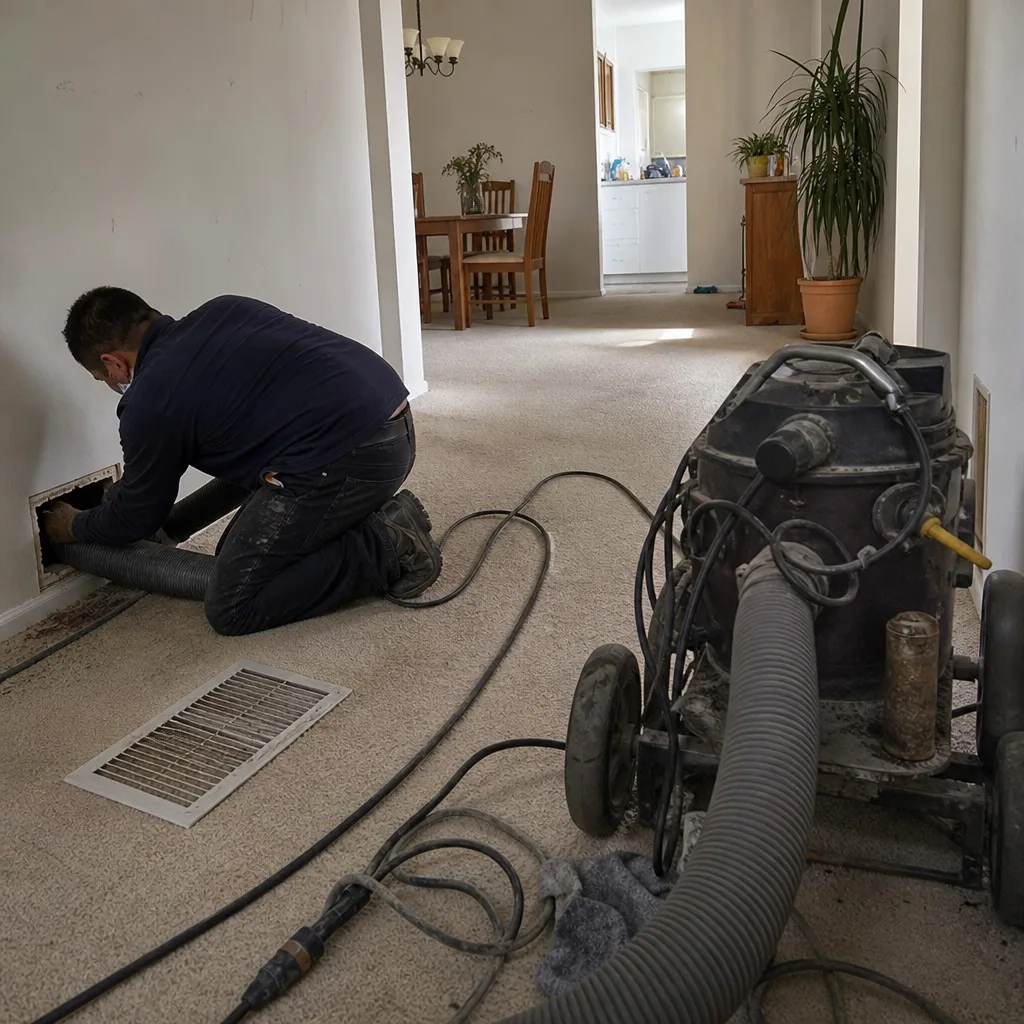
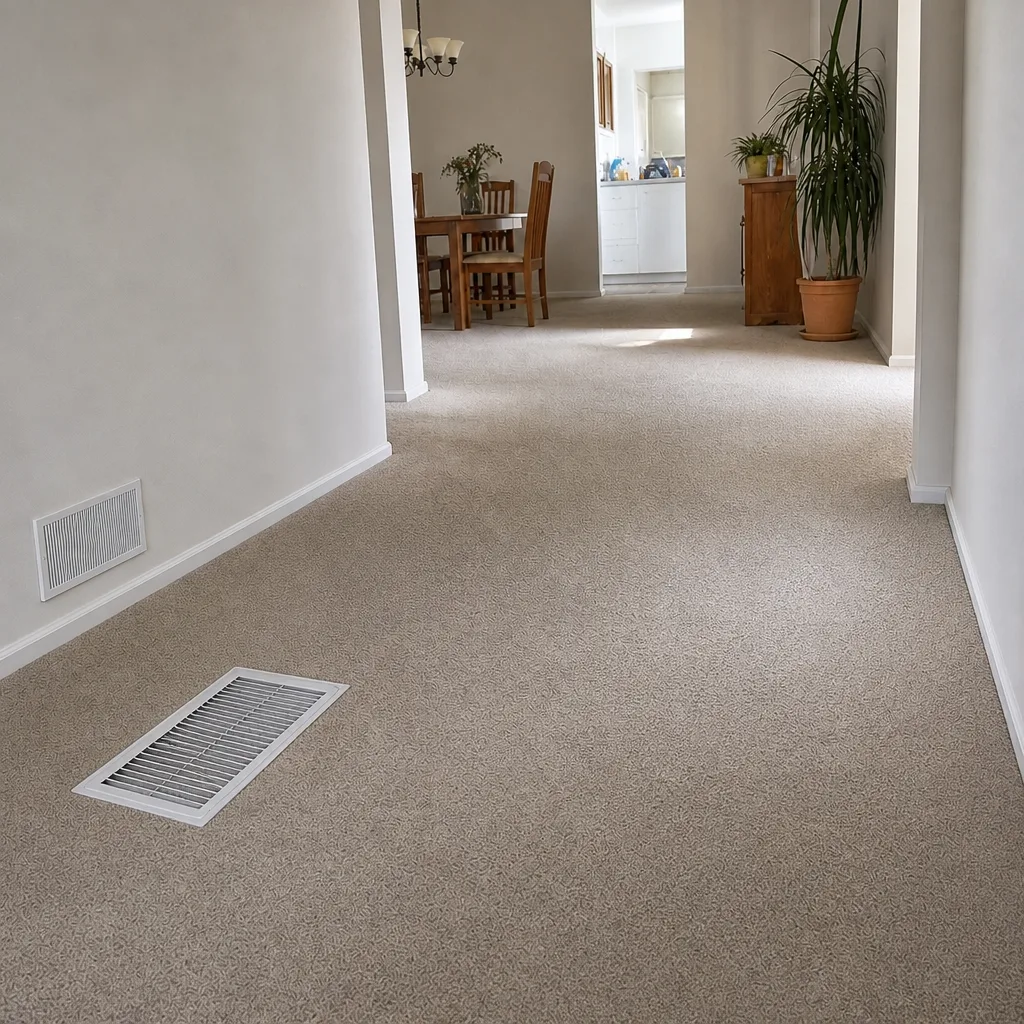
Whole-system duct and dryer vent check with before-and-after photos - you see exactly what came out of your vents
That "$99 whole-house special" is a bait ad - the real number appears once they are in your hallway, or the "clean" is a shop-vac at the register. We photograph the inside of your ducts before and after instead.
Air Duct Cleaning Emergency Preparedness Guide for Renton Homes
Most homeowners treat duct cleaning as a chore you get to eventually. That is backwards. Your duct system is the one piece of infrastructure that decides what your family breathes during a smoke event, a power outage, a quake, or a burst pipe, and it is also the piece most people never inspect until something goes wrong. During the 2020 wildfire smoke event, Renton recorded AQI levels above 200 for several consecutive days, and homes with poorly sealed ducts and no bypass plan pulled that air straight into living spaces. Having a duct emergency plan isn’t paranoid. It’s Pacific Northwest practical. This guide walks you through the scenarios that actually happen in Renton, from smoke lockdown to post-quake inspection, so you can act with a checklist instead of a panic.
Styles & brands we work with
- Whole-home duct cleaning
- Dryer vent cleaning
- Camera inspection
- Sanitizing & deodorizing
Quick Answer
A duct emergency plan for a Renton home means three things: knowing how to put your HVAC system into smoke-lockdown mode (closed fresh-air intake, MERV-13 filter, fan set to recirculate), knowing where your ducts run and how to shut the system off before you run it after a quake, flood, or wildlife intrusion, and having a one-page information card that tells a responder or house-sitter what your system is and who serviced it last. Build the plan before the emergency, not during it.
Table of Contents
- Why Duct Preparedness Matters More in Renton Than in Most Places
- Smoke Lockdown Mode: Your HVAC Game Plan for an Air Quality Emergency
- Post-Earthquake Duct Inspection Protocol
- The 48-Hour Post-Flood Protocol for Crawlspace Duct Systems
- When Wildlife Gets Into Your Duct System
- Building Your Home’s Duct-System Information Card
- Year-Round Maintenance That Keeps You Emergency-Ready
- Common Mistakes to Avoid
- When to Call a Professional
- Frequently Asked Questions
Why Duct Preparedness Matters More in Renton Than in Most Places
Renton sits in a bowl of geography and weather that stacks several emergency scenarios on top of each other. The Cascades to the east trap wildfire smoke in the valleys and push it west when the wind shifts. Puget Sound air inversions hold stagnant, particulate-heavy air in place for days at a time and refuse to let it clear. Both of those are air quality problems that land directly on your HVAC intake. Add to that the Pacific Northwest’s seismic reality: the region sits on fault systems that have produced serious shaking before and will again, and any quake of size loosens duct joints, seams, hangers, and flex connections throughout a house.
Where those problems meet is your duct system. It’s the mechanical network that either protects your indoor air or quietly funnels outdoor air and contaminants into every room. A well-sealed, clean, professionally maintained system gives you options during a smoke or stagnation event: you can reduce the intake, upgrade your filter, and run the fan in recirculation to buy yourself clean air for days. A leaky system with years of accumulated dust and no filter plan does the opposite. It pulls smoke and particulate in through gaps you can’t see and distributes it room to room.
The good news is that duct preparedness is mostly cheap and entirely doable. You don’t need new equipment to put your system into lockdown. You need to know what you have, where the controls are, and what to check after a disruption. The rest of this guide is the checklist.
Smoke Lockdown Mode: Your HVAC Game Plan for an Air Quality Emergency
Smoke lockdown mode means closing your fresh-air intake, switching to a MERV-13 filter, and setting your fan to recirculate so your system conditions and filters indoor air instead of pulling outdoor air inside. That’s the entire concept in one sentence. The execution takes a little more care because every system is configured differently. Here’s how to think through it, not just what buttons to press.
First, understand what your system is doing when it runs. A standard residential HVAC system draws return air from your living space, filters it, conditions it, and supplies it back through the supply ducts. If your system has a fresh-air intake or an economizer, it can also pull outdoor air into the return. During a smoke event, that fresh-air intake is exactly the thing you want closed. Some systems have a manual damper at the intake; some have a motorized damper tied to a control. Older Renton homes with retrofitted HVAC systems often have the intake in an unexpected place (a garage wall, a soffit, a side-yard enclosure), so track yours down before you need it.
Second, upgrade the filter. A standard fiberglass filter that came with the house is not a smoke filter. A MERV-13 pleated filter captures fine particulate far better than a MERV-8, and it’s the sweet spot for most residential systems. Going above MERV-13 generally puts too much static pressure on a residential blower and cuts airflow. Check the filter slot’s depth and the filter size printed on the existing filter’s frame before you buy one.
Third, set the fan. Many thermostats have a “fan on” or “circulate” mode that runs the blower continuously without calling for heat or cooling. Running the fan on recirculate with a MERV-13 filter lets your system function as a whole-house air cleaner during a smoke event. If your system is a heat pump or a furnace, this is the same blower, and it’s the same idea.
- Close the fresh-air intake. Find your intake damper and shut it. If you can’t find it, don’t guess; that’s a professional question.
- Swap in a MERV-13 filter. Confirm the size and depth first. Never force an oversized filter into a slot that’s too shallow.
- Set the thermostat fan to “on” or “circulate”. This gives you continuous filtration.
- Close windows, exterior doors, and the fireplace damper. A cracked window defeats the whole effort.
- Run a portable HEPA air cleaner in the room where you sleep. Redundancy matters during a multi-day smoke event.
- Watch the filter. A MERV-13 that’s caked with smoke particulate loads up fast. Check it after three or four days of continuous running.
If your system can’t be set up this way because it lacks a recirculate mode, has no accessible intake damper, or has a filter slot too shallow for a MERV-13, that’s a system issue, not a you issue. This is the kind of problem an air-pathway specialist can help you sort out before the next smoke season. The professional-grade tools we use, from Rotobrush for duct cleaning to Abatement Technologies filtration units that capture dislodged contaminants during cleaning rather than recirculating them, are part of a lockdown plan; the other part is knowing exactly what your system is.
Post-Earthquake Duct Inspection Protocol
After any earthquake you can feel, don’t run your HVAC system until you’ve visually checked the duct connections in the attic and crawlspace and confirmed there’s no loose flex duct, disconnected joint, or fallen hanger. Running a system with a disconnected duct joint means blowing air into your attic or crawlspace, which is a waste and a possible contamination route. It also means pulling crawlspace air into the living space through the gap. In Renton, where many homes have crawlspace-based duct runs and flex duct connections at the plenum, this check matters more than most people realize.
The protocol is straightforward and visual. You’re not opening the system; you’re looking for obvious damage. Here’s the sequence:
- Shut the system off at the thermostat first. Don’t run the fan while you’re inspecting.
- Check the attic. Look at the duct runs you can see without crawling through the field: connections at the plenum, hangers, and the flex duct taped joints at supply boots. Look for sagging duct, popped tape, or a duct that’s come off a boot entirely.
- Check the crawlspace. Same process. Look at hangers, joints, and where duct meets the plenum. Watch for ducts that have dropped and now sit on grade or against a moisture source.
- Check the return air path. Some returns are cavity returns (the wall or floor cavity itself is the duct). In a quake, gaps around cavity returns can open. Look for gaps at floor registers and return grilles.
- Smell the air during a short test run. After you’ve confirmed nothing is visibly disconnected, run the fan briefly. Musty, earthy, or chemical smells are a signal to shut it off and call a professional.
- Don’t ignore the outdoor unit and electrical. Any question about a gas appliance, an electrical panel, or a damaged outdoor compressor is a technician call, not a homeowner check. Gas leaks and electrical issues are safety emergencies.
A caveat that belongs in any honest quake checklist: after a significant seismic event, damage you can’t see is a real possibility. A duct that looks fine at a joint may have shifted at the plenum or behind drywall. If your home has an older flex duct system, if you heard shifting or debris fall during the quake, or if the HVAC was running when the shaking started, that’s a case to have a professional inspect and reseal. Our air duct cleaning and duct repair and sealing services include this kind of post-event inspection: we seal what we clean, so a loose joint is something we fix, not just note.
The 48-Hour Post-Flood Protocol for Crawlspace Duct Systems
If your crawlspace has taken on water, keep the HVAC system off until you’ve had a professional assess duct insulation and joints for moisture, and never run the system to “dry out” the crawlspace. Running HVAC through water-damaged ducts distributes moisture and biological contaminants through every room in the house, and it’s one of the fastest ways to turn a water problem into an air quality problem.
Renton’s winter weather brings rain volume that can find its way into a crawlspace through grading, foundation cracks, or a blocked perimeter drain. When that happens, the first 48 hours decide whether you have a clean, dry system or a mold problem on your hands. The crawlspace is where much of the duct system lives in this part of the country, and insulation around the ducts is a sponge.
- Turn the thermostat off and shut the system down at the breaker if the crawlspace is flooded. Don’t run the fan to move air.
- Get the water out and get air moving with a fan and dehumidifier inside the crawlspace itself. That’s separate from the HVAC system.
- Don’t run the HVAC for at least the first day and night. Let surfaces dry, and let a professional see what’s wet.
- Call for a professional inspection of the ducts in the affected area. Insulated flex duct that’s been submerged or soaked needs to be evaluated, and often replaced, not dried in place. Duct board and interior insulation that stays damp are a biological growth risk.
- Before you run the system again, the ducts should be inspected and, if water reached them, cleaned and the affected sections repaired or replaced. Our duct repair and sealing capability is important here: a system that’s been wet often has compromised joints after drying, and resealing is cheaper than re-doing the whole run.
- Follow up with a full-system HVAC cleaning if you smell musty air when you restart. A musty smell after a flood is a signal, not an annoyance to ignore.
One more thing: some flood events bring in water that’s not exactly clean (sump backup, street runoff). In those cases, the standard is stricter, and the professional assessment should treat the affected ducts as contaminated until proven clean. That is a service decision for the inspection, not a guess from the sofa.
When Wildlife Gets Into Your Duct System
The moment you suspect an animal is in your ducts, shut the HVAC system off and don’t run the fan. Running the system distributes whatever the animal has brought in (fur, droppings, nesting material, insects, pathogens) through every register in the house, and once that’s in the living space, cleanup is a whole-house job. Renton’s location near greenbelts and wooded corridors makes this a real, recurring problem, not a hypothetical.
Signs you’re dealing with a duct intruder, in roughly the order homeowners notice them: scratching, thumping, or scrabbling sounds from a wall or ceiling, especially in early morning or late evening; a smell that’s more animal than dust; visible droppings near a return register or in the crawlspace; insects appearing in a room with no other explanation; and a filter that suddenly loads up with an unusual amount of hair or debris.
What to do, in order:
- Shut the system off. Fan off, thermostat off. This is the most important step and it’s the one people skip.
- Don’t try to flush the animal out by running the fan or chasing it. An animal in a duct is defensive and can damage the duct trying to escape.
- Call a wildlife removal professional to get the animal out and seal the entry point. Duct cleaning comes after removal, never before.
- Once the animal is out and the entry point is sealed, the affected duct sections need professional cleaning and likely sanitizing. This is where professional equipment matters: a consumer shop vac will not move the volume of air that a contaminated flex duct needs, and it will recirculate what it pulls.
- Check the insulation and the joints. Animals tear things. A professional assessment of joints and insulation is part of the cleanup, and a reseal is often the difference between solved and recurring.
After a wildlife intrusion, sanitizing the affected air pathway is the second step of the cleanup, not an optional add-on. Our air quality and sanitizing service is meant for exactly this kind of situation, and we carry Guardsman and Aprilaire air quality products to address the root cause rather than just the smell.
Building Your Home’s Duct-System Information Card
A duct-system information card is a one-page document listing your system layout, shutoff locations, filter specs, and last service date, kept where a responder or house-sitter can find it in seconds. This is the preparedness step that takes the least time and pays the most when the phone is in someone else’s hand. Emergency responders arrive with no idea where your HVAC shutoff is or what kind of system you have. A house-sitter has even less. A card solves that.
Here’s what to put on it:
- System type (forced air furnace, heat pump, or other) and the brand name on the unit.
- Thermostat model and where it lives in the house.
- Filter size and MERV rating currently installed, plus the depth of the slot and where the filter is located (return grille, filter cabinet, or blower compartment). Write the actual filter size down (length, width, depth).
- Electrical shutoff location for the air handler or furnace (a labeled breaker at the main panel, plus any secondary switch near the unit).
- Gas shutoff location if the system is gas. This is a safety item; if you don’t know where it is, that’s a question for your gas utility or a licensed plumber.
- Duct access points for the attic and crawlspace (which hatch, how to open it, any tools needed).
- Fresh-air intake location and damper type (manual, motorized) for smoke lockdown.
- Last service date and what was done. If you’ve had duct cleaning, note the date and company.
- The name and phone number of your duct or HVAC professional. That’s the number on the card that gets called first.
Laminate it, tape it inside a utility closet door or the furnace access panel, and put a second copy in the emergency binder next to your insurance and contact list. If you don’t yet have a service history to write down, a first professional air pathway assessment gives you one. Our technicians have up to 15 years of experience assessing exactly this kind of system, and a written record of what’s in your home is part of the value of having us out. At Renton Air Duct Cleaning Co, we build the record with you.
Year-Round Maintenance That Keeps You Emergency-Ready
The best emergency plan is a system that’s already clean and sealed so that when something happens, the problem is the emergency itself and not a decade of accumulated dust making it worse. Routine maintenance is where preparedness lives in between events. Here’s the schedule we recommend for Renton homes.
- Filter change or cleaning every three months for standard residential filters, sooner if you have pets, allergies, or you’re in a smoke or pollen season.
- Professional air duct cleaning every three to five years for most homes, sooner after a renovation, a move-in, a wildlife intrusion, or a flood event.
- Professional dryer vent cleaning on a regular schedule. Dryer vents are a documented fire risk, and lint buildup is the reason. This is fire safety and air quality handled together, and it’s a core service with us, not an upsell tacked onto a duct job.
- HVAC cleaning and inspection as part of a system service or before each heating season, so a compromised heat exchanger or blocked blower doesn’t show up during a cold snap.
- Duct repair and sealing as a fix-it visit if you notice uneven room temperatures, whistling vents, or high dust. Those are all signs of leaking ducts, and leaking ducts are the difference between a house that holds clean air during a smoke event and one that doesn’t.
The equipment matters here, and that’s not a slogan. Consumer-grade shop vacuums, which some general handyman operations use for duct jobs, don’t move the air volume or capture the particulate a real system does. The professional-grade Rotobrush and Nikro equipment we use is the same class of equipment used by commercial and restoration contractors. The Abatement Technologies air-filtration units we run on every job are there to pull dislodged contaminants out of the work zone instead of letting them recirculate through the home. That difference is invisible at one visit, and decisive at a post-flood rescue.
Common Mistakes to Avoid
- Running the HVAC system to “test” it after a flood, quake, or wildlife intrusion. You only get one clean run; that first fan cycle is what distributes contamination into the living space. Shut it off and inspect before you trust it.
- Buying a MERV-16 filter “for smoke” without checking your blower rating. In most residential systems, a filter that’s too dense starves the blower of airflow and can damage the system. MERV-13 is the realistic ceiling for most homes; the professional assessment of your system is worth the conversation.
- Assuming a sealed house equals clean air during a smoke event. A house with leaky duct joints and gaps around cavity returns pulls outdoor air inside every time the system runs. Sealing the ducts is part of the plan, not an optional upgrade.
- Using a shop vacuum to clean ducts after a wildlife or flood intrusion. Consumer-grade equipment recirculates what it pulls and doesn’t move the volume of air a contaminated duct system needs. The tools are professional for a reason.
- Forgetting the dry the system out part after a crawlspace flood. Ducts that stay damp behind insulation are a biological growth risk. Getting the crawlspace dry and getting a professional assessment are two separate but equally necessary steps.
- Never writing anything down. Homes without an information card lose their filter specs, service history, and shutoff locations on the day someone else has to run them. Make the card.
- Skipping dryer vent cleaning because “the dryer still works”. A dryer that’s taking longer to dry clothes is a vent flow signal, and the failure mode for a clogged vent is fire, not inefficiency. In Renton’s tight, often older housing stock, this is a hazard worth taking seriously.
When to Call a Professional
Call a professional when the air pathway has been compromised in a way you can’t safely assess yourself: after a significant earthquake, after a flood reached the crawlspace, when there’s wildlife in the ducts, or when a contractor is scheduled to open a wall near a duct run. Call us when you can see dust and debris coming out of a vent, when a room doesn’t heat or cool like the rest of the house, when the air smells like damp or must, or when you just moved in and don’t know the system’s history. Also call for a professional filter upgrade assessment during smoke season: knowing your system’s filter ceiling and shutting your intake correctly is worth an hour of a specialist’s time. Renton Air Duct Cleaning Co offers free estimates in Renton – call (855) 337-1999. We answer 24/7 and offer fast dispatch from 7am to 7pm.
Frequently Asked Questions
Shut the fresh-air intake and run the system fan on recirculate with a MERV-13 filter, and shut your windows. Closing the intake is the single step that stops outdoor air from being pulled in through the return. Everything else is secondary. Call (855) 337-1999 if you don’t know where your intake damper is and want an exact plan for your system – estimates are free.
No. Shut the system off at the thermostat, then visually inspect the duct connections in the attic and crawlspace before you run it. If you find a loose joint, a fallen hanger, or a disconnected flex duct, call for professional inspection and repair before the system runs. Call (855) 337-1999 for a post-quake inspection; we answer 24/7.
Routine air duct cleaning is generally priced per whole system rather than per vent, and the honest answer is that exact pricing depends on the size of the system, the number of duct runs, the degree of contamination, and whether the job includes repair or sealing. Any quote that sounds like a coupon price usually grows once the technician is on site, which is why we work from a written estimate agreed before the work starts. Call (855) 337-1999 for a free estimate and a written price before anything begins.
Because the cheap quote and the professional quote are usually not the same service. A low price often means a shop vacuum or handheld blower rather than a Rotobrush or Nikro system, no Abatement Technologies filtration on the work zone, no cleaning of the air handler or the return path, and no repair capability for leaking or disconnected ducts. You get what the equipment can do, and what the technician actually inspects. Call (855) 337-1999 to see what a written, whole-system estimate looks like for your home.
Ask for before-and-after photos of your own ducts and the interior of your air handler. A professional who has opened the system and cleaned it can show you what was there and what’s there after, and that’s the only verification that matters. We take before-and-after photos on every job. Call (855) 337-1999 to schedule an estimate with photos included.
Every three to five years for most Renton homes, sooner after a move-in, a renovation, a flood, a wildlife intrusion, or a noticeable increase in dust and allergy symptoms. Homes with pets, allergy concerns, or older duct systems are on the shorter end. Call (855) 337-1999 to talk through your situation; estimates are free.
Shut the HVAC system off and don’t run the fan, then call a wildlife removal professional to get the animal out and seal the entry point. Duct cleaning and sanitizing come after removal, never before. Call (855) 337-1999 once the animal is out and we can get the system cleaned, sealed, and sanitized.
The Bottom Line
Duct preparedness is not a specialty add-on for paranoid homeowners. In Renton, with its smoke events, air inversions, seismic risk, and wet-winter crawlspaces, it’s basic household readiness. Build the information card, find your intake damper, stock a MERV-13 filter, know where your crawlspace ducts run, and shut your system off after a quake, flood, or wildlife intrusion before you trust it again. Those five habits cover most emergency scenarios. The rest is having a professional who knows the full air pathway on speed dial. We’re that professional: ducts, HVAC system, dryer vent, air quality, and the sealing that holds it all together, in a single visit.
Call (855) 337-1999 for a free estimate. We answer 24/7. Fast dispatch from 7am to 7pm, Sunday through Friday. Closed Saturday; a call outside dispatch hours is booked into the next opening.
Browse our Renton Air Duct Cleaning Co team’s other services to see how the full air pathway comes together. Dryer vent cleaning and HVAC cleaning are both part of the preparedness plan, and an air duct cleaning assessment is the right starting point.
Written by the team at Renton Air Duct Cleaning Co.
See the difference
 Before
 After
 Before
 After
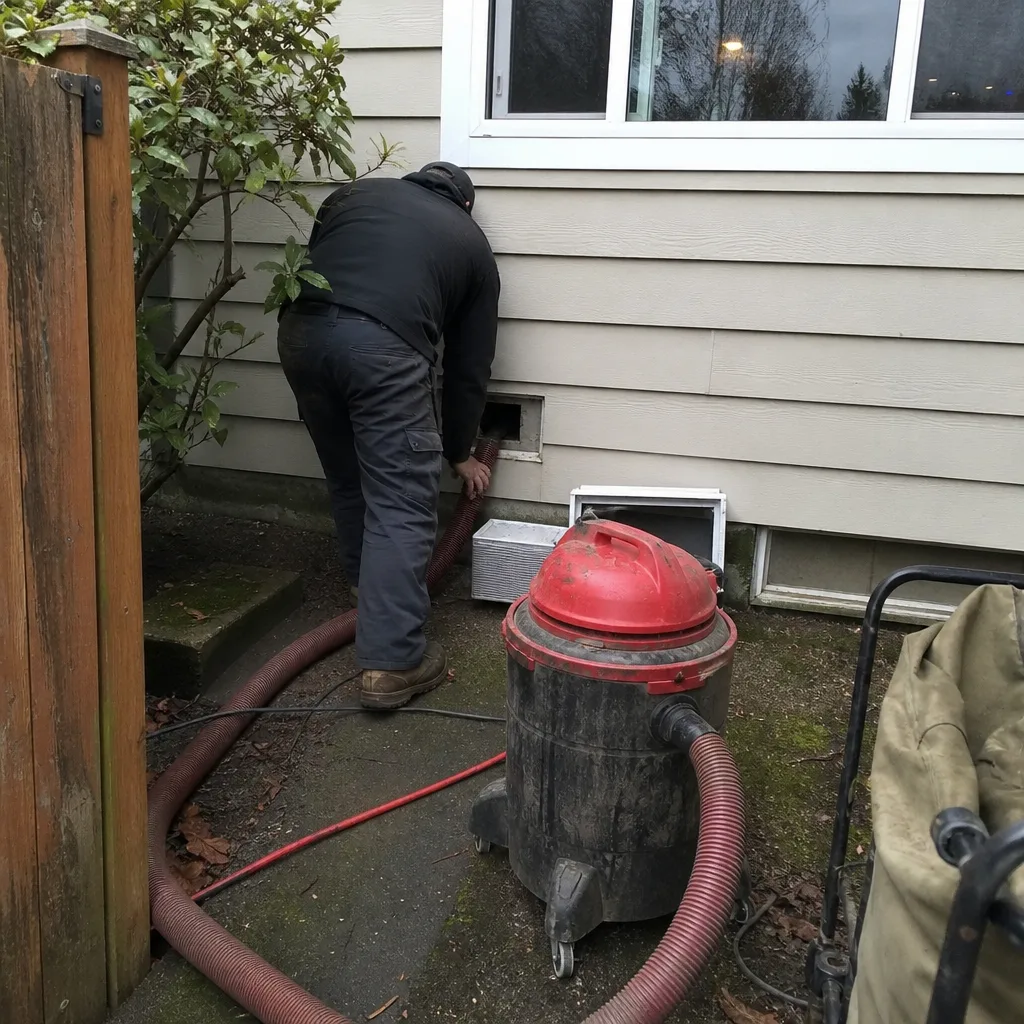 Before
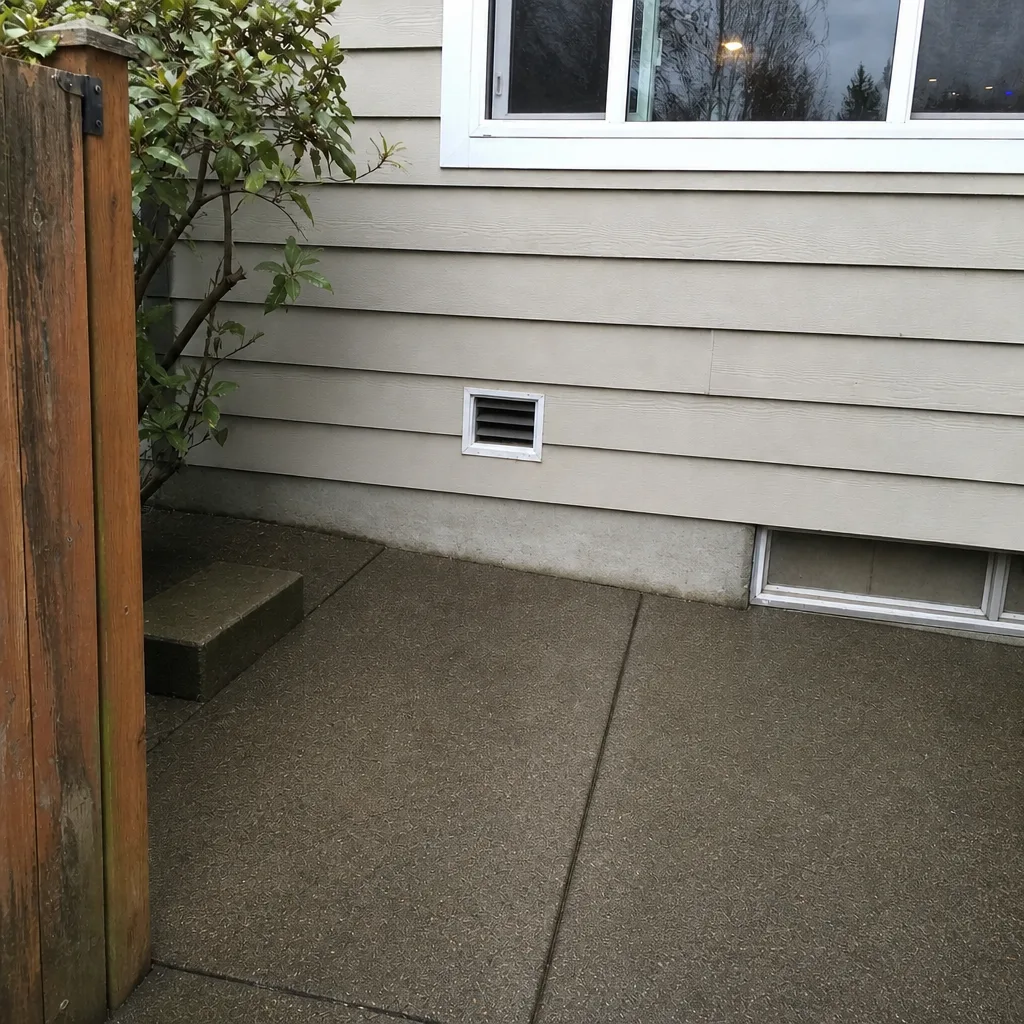 After