
Last updated November 25, 2026
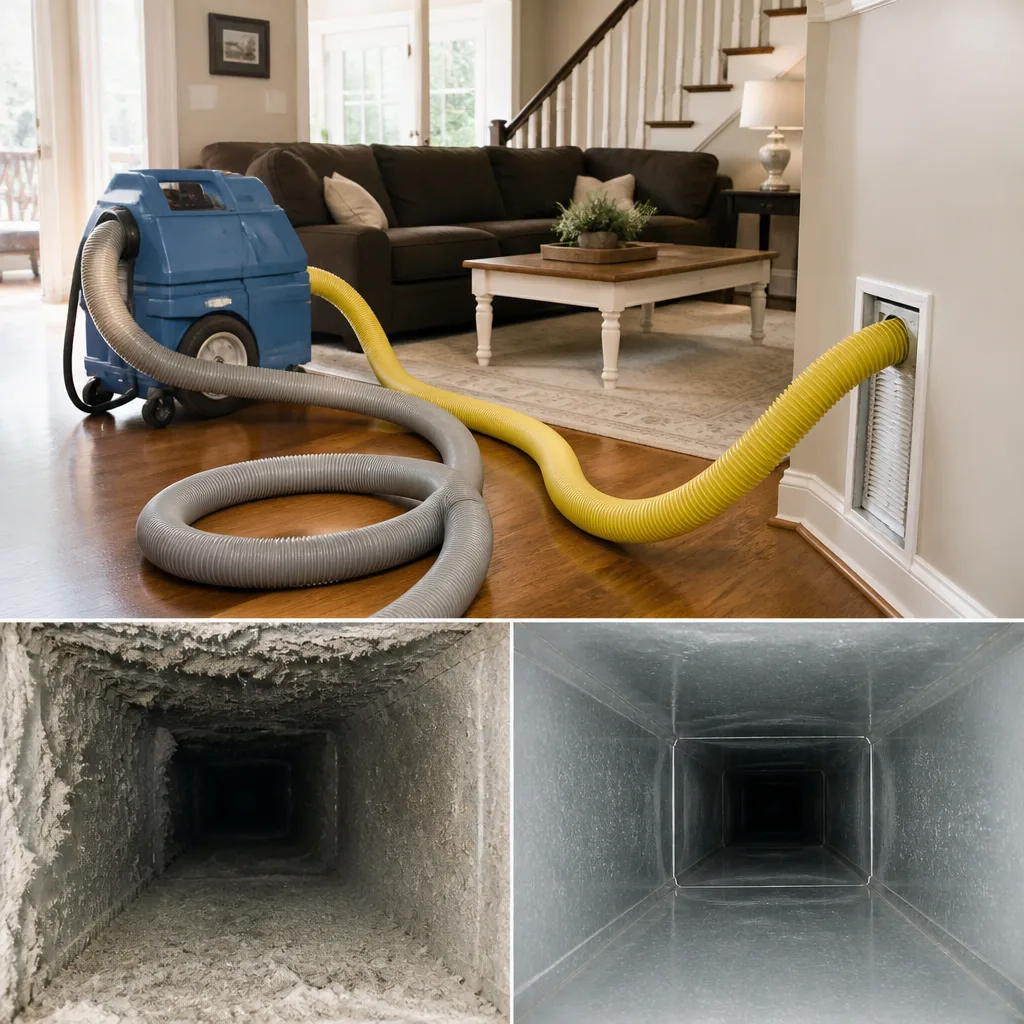 Whole-home duct cleaning
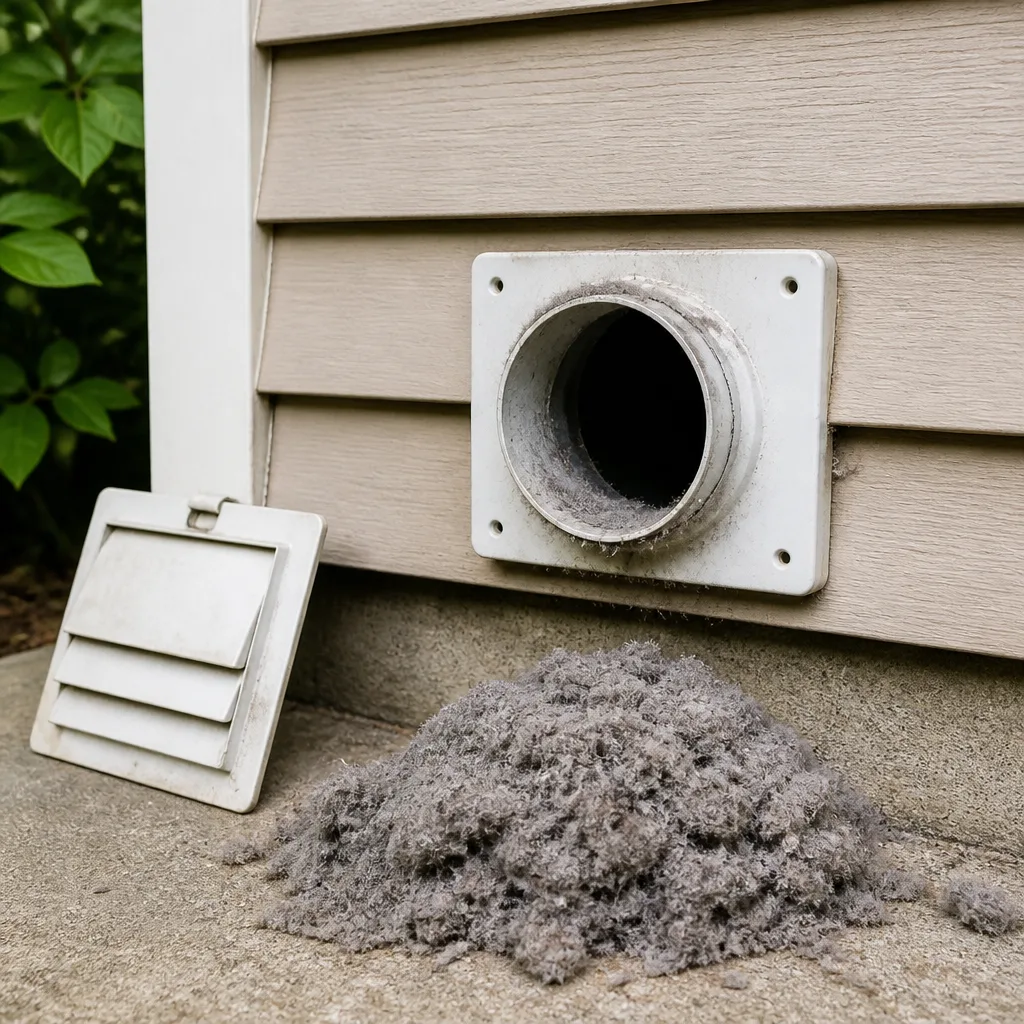 Dryer vent cleaning
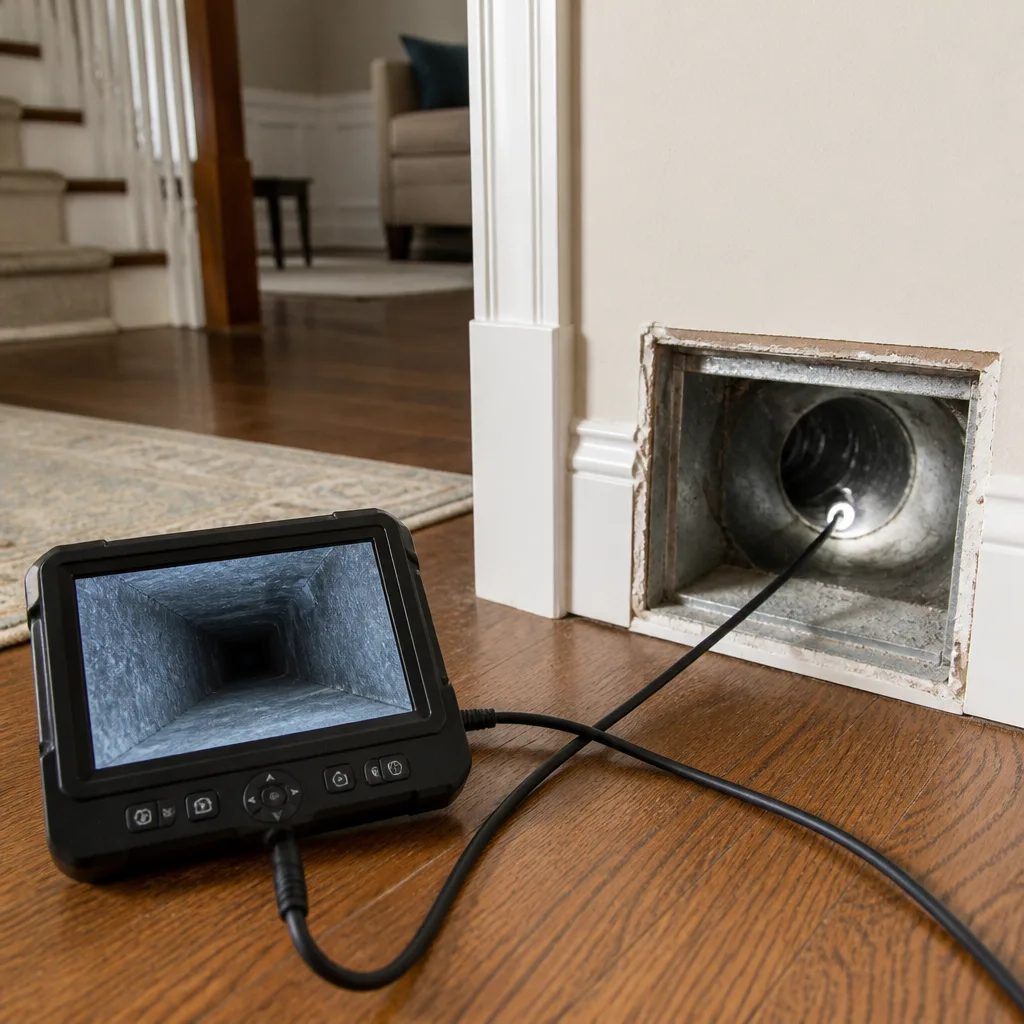 Camera inspection
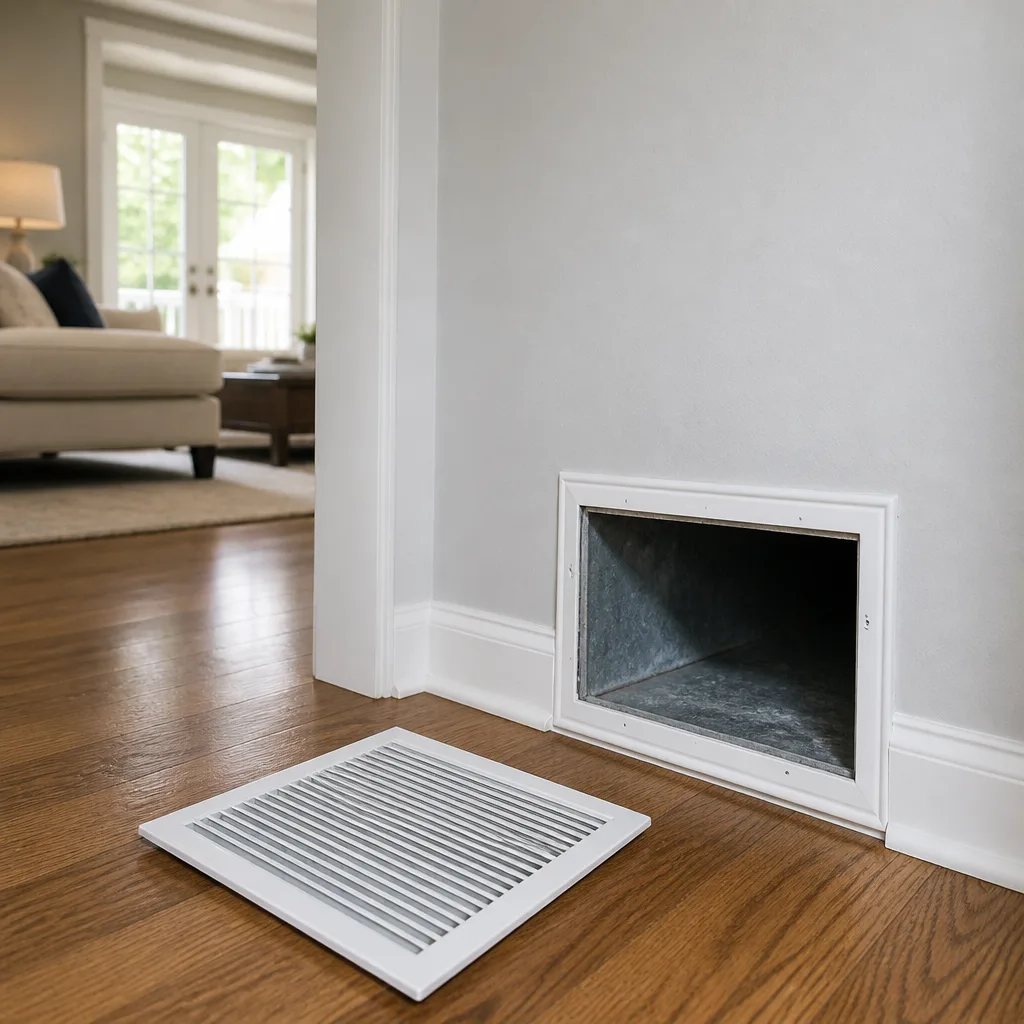 Sanitizing & deodorizing
Whole-system duct and dryer vent check with before-and-after photos - you see exactly what came out of your vents
That "$99 whole-house special" is a bait ad - the real number appears once they are in your hallway, or the "clean" is a shop-vac at the register. We photograph the inside of your ducts before and after instead.
Air Duct Cleaning Maintenance Checklist for Renton Homeowners
The filter you pulled out last month isn’t just dirty. It’s a data point. Its color, its weight, and what’s caked into the pleats tell you what’s happening inside your duct system right now, if you know how to read it. Most homeowners treat duct maintenance as a single chore, like changing a battery, when it’s actually a running log of your home’s health. This guide hands you that log: a month-by-month checklist built around Renton’s real seasons, a way to read your registers, a filter selection guide, and the photo documentation that makes every professional visit sharper. By the end you’ll be monitoring your air pathway instead of guessing at it.
Quick Answer
A working air duct maintenance checklist for a Renton home means a visual register check every month, a filter change on a schedule your filter actually supports, photo documentation at three points in the year, and a professional cleaning on a cadence that fits your household. In Renton’s wet climate, the two conditions that matter most are indoor humidity staying between 40 and 50% RH and knowing the difference between surface dust and the sticky biofilm that signals moisture in the system.
Styles & brands we work with
- Whole-home duct cleaning
- Dryer vent cleaning
- Camera inspection
- Sanitizing & deodorizing
Table of Contents
- Why a System-State Log Beats a Chore List
- The Renton Seasonal Calendar: October, June, September
- Reading Your Supply and Return Registers
- Choosing the Right MERV Rating for Your Renton Home
- Humidity Monitoring and Duct Mold Risk in Wet Months
- What to Photograph Between Service Visits
- Filters, Dryer Vents, and the Parts of the Loop People Forget
- How Often You Actually Need Professional Service
Why a System-State Log Beats a Chore List
Almost every duct maintenance article you’ll read hands you the same three instructions: change your filter every 90 days, vacuum your registers, schedule a cleaning once a year. Those aren’t wrong. They’re just not useful, because they don’t account for what’s happening between those milestones. A chore list tells you to do something. A system-state log tells you what your system is telling you.
The difference matters in a place like Renton, where the moisture picture changes dramatically across the year. A filter that looks fine in August can be a sponge by December. A register that was clean in April can show rust staining by November. If you only check on a fixed schedule, you miss the drift. If you check monthly and write down what you see, you catch it early.
Here’s the framework we recommend to every homeowner we work with: a simple notebook or a phone album, and three data points per month.
- Filter condition: a photo and a one-word grade (clean, gray, heavy, clogged).
- Register inspection: a photo of the two registers you can see most easily from where you spend the most time, plus a note on anything that looks different from last month.
- Humidity reading: a cheap digital hygrometer from any hardware store, placed in a central room, read on the same day each month.
Three data points, ten minutes a month. That’s the whole system. Everything else in this guide is about how to read what you’re writing down. Our technicians have up to 15 years of experience, and the single biggest difference we see between a smooth service visit and a complicated one is whether the homeowner has been watching.
The Renton Seasonal Calendar: October, June, September
Renton’s climate has three inflection points that matter for your ducts, and they don’t line up with the calendar year the way most generic checklists assume. If you only remember three dates, remember these: the first week of October, the first week of June, and the first week of September. Each one marks a shift in what’s moving through your air pathway.
Early October: Pre-Heating-Season Reset
This is the most important checkpoint of the year in Renton. The furnace or heat pump is about to run for months, which means air that has been sitting in the ducts all summer is about to get pushed through your home. October is when you want to:
- Replace the filter before the first real heating cycle, not after.
- Do a full visual sweep of every register you can reach, especially the ones in rooms you don’t use much.
- Check the return grille for anything that’s been drawn against it by summer fan use.
- Note the humidity. If the house has been closed up all summer, indoor RH often drifts higher than it should, and that’s the setup for mold growth once the heat kicks on.
If you’re going to schedule a professional visit for the year, October is often the most useful time in Renton. You catch the summer’s accumulation before it gets recirculated for six months, and you go into heating season with a clean system. This is also the season where air duct cleaning tends to make the biggest visible difference, because you can actually see the contrast between what came out and what’s left.
Early June: Post-Pollen-Peak Inspection
Renton’s spring pollen load peaks through May, and whatever was pulled into your return system during that stretch is now sitting in the ductwork. June is when you want to inspect, not necessarily clean. Look at your registers and note what kind of debris is visible. Pollen shows up as a fine, uniform, yellowish or greenish dust that settles evenly. If you see something more granular, it’s construction debris or soil tracked in from outside, which tells a different story about your home’s envelope.
June is also a good time to think about whether your filter is the right MERV rating for a high-pollen load. We cover that in its own section below, but the short version: if you or anyone in the house is sensitive to pollen, June is when you want the higher-efficiency filter in place, not October.
Early September: Post-Wildfire-Smoke Window
Renton gets smoke incursions from regional fires in most summers, and the timing varies. By early September, the season’s smoke has usually passed and it’s time to assess. Smoke particulate is fine enough that it penetrates standard filters and deposits in the duct system. It also carries an odor that can linger long after the visible haze is gone.
September is when you want to check two things: whether the smell of smoke still shows up when the system runs, and whether your filter is darkened unevenly. Uneven darkening suggests the smoke was drawn in through one side of the system more than the other, which can point to a return-side imbalance worth flagging to whoever services your HVAC. If both are clean, you had a good smoke season. If either is off, schedule a professional visit before heating season starts in October.
Reading Your Supply and Return Registers
Your registers are the only part of the duct system you can see, and they’re showing you more than most people realize. The trick is knowing what each visual signal means. Here’s the translation table we use:
- Uniform gray dust: normal accumulation. Keep watching, clean the register face, and note it in the log. No action needed.
- Yellowish or greenish fine powder: pollen residue. Expect it in late spring and early summer, expect it to be worse on the return side, and let it guide your MERV choice rather than your cleaning schedule.
- Dark, sticky, or waxy film with a ring pattern: biofilm. This is the signal that matters most. Biofilm forms where condensation has been present long enough for microbes to establish. A biofilm ring means moisture is getting into the duct and staying there, and it’s a reason to call a professional rather than clean harder.
- Orange or brown rust staining on the register face or the nearby drywall: moisture at the register boot or the duct connection. Rust on a metal register doesn’t mean the register is failing, it means water has been sitting there. Worth investigating.
- Black or gray soot-like smudges at the edges of the register opening: air leaking past the register boot. This is an unsealed joint, and it’s the single most common issue we find on inspection. It’s also a fixable one.
- Stringy or cottony debris hanging from the register: usually dust that has picked up enough moisture to mat together. Not dangerous on its own, but a sign the duct interior is damp.
The pattern matters as much as the material. If the same two registers look bad and the rest look fine, you’re looking at a ducting issue in one branch rather than a whole-system problem. If everything looks uniformly bad, it’s a system-wide condition. And if the return registers look much worse than the supply registers, that’s normal, because the return is doing the pulling.
Renton homes have one additional wrinkle worth knowing. In the rentals and older homes we see around the Highlands and the Renton Village area, register boots are sometimes the origin of leaks that get blamed on the roof or the plumbing. If you see rust staining at a register during the wet months, it’s worth checking whether an attic or exterior moisture source is reaching the duct before assuming the duct itself is the problem. That’s a duct repair and sealing question, not a cleaning question, and we seal what we clean for exactly this reason.
Choosing the Right MERV Rating for Your Renton Home
Most homeowners pick a filter by whatever was on the shelf last time. That’s fine if your house is the average house. Most Renton homes aren’t the average house, because of three specific factors: pets, gas ranges, and proximity to the freeway corridor.
Here’s the selection guide we walk our own customers through:
- Standard household, no pets, no indoor air concerns, no freeway proximity: MERV 8. This is the filter most residential systems are designed around, and it protects the equipment without adding pressure drop. Change it on the schedule your filter supports, usually every 60 to 90 days.
- One or more pets, no other concerns: MERV 8 to MERV 11. Pet dander is larger than fine smoke particulate and is captured well by MERV 11, but MERV 13 and above can start to restrict airflow in a system not designed for it. Try MERV 11 first and watch the system, not the filter.
- Gas range in regular use, especially in an open kitchen: MERV 11 minimum, and consider the range hood situation at the same time. Combustion byproducts are fine particulate, and they’re in the same size range as smoke. If the range hood isn’t venting well, no filter fully compensates.
- Close to the I-405 corridor, especially the neighborhoods along the eastern side of Renton: MERV 11, possibly MERV 13 depending on the system. Freeway particulate is fine and continuous rather than episodic, which means higher filtration matters more here than in a comparable inland community. If your system was sized for MERV 8, check with whoever services your HVAC before going to MERV 13, because pressure drop can matter over the life of the equipment.
- Household with asthma or allergy concerns: MERV 13 or higher, again with a check on whether the system can handle the pressure. This is also where a dedicated indoor air quality approach pays off, which is why we carry Renton Air Duct Cleaning Co as a legitimate specialist rather than as a filter-only service.
Two Renton-specific notes. First, the wet months don’t just raise humidity, they raise mold spore counts outdoors, and that’s a different filtration challenge than pollen or smoke. A filter that’s doing a good job in December will look grayish and slightly soft when you pull it, which is normal as long as it hasn’t gone damp. Second, if you switch MERV ratings, write it down in your log with the date. Filter changes are easy to forget, and a written rating change gives the next service visit useful context.
Humidity Monitoring and Duct Mold Risk in Wet Months
Indoor humidity between 40 and 50% RH is the safe band for a Renton home. Below 40% and you’re looking at dry air comfort issues that have nothing to do with duct health. Above 50% and you’ve entered the range where dust in your ducts can support biological growth, especially in the wet months from November through March.
This is the part of the checklist most people skip, and it’s the part that matters most in Renton’s climate. Ducts are cold metal boxes running through unconditioned space. When the air inside the duct is colder than the surrounding air, condensation forms. It doesn’t take much. A consistent 55% indoor reading during a cold snap means the duct surface in the attic or crawlspace can be wet, and wet duct interiors are the reason biofilm rings appear on registers.
Here’s what we recommend monitoring:
- Place a digital hygrometer in a central room, at about sitting height, away from the kitchen and bathrooms.
- Read it on the same day each month and write the number in your log. Month-to-month trend matters more than any single reading.
- If the reading is consistently above 50%, the priority is source control, not a dehumidifier. Bathroom and kitchen exhaust fans that run long enough, dryer vent that’s properly connected and clear, and crawlspace vapor barrier intact. Every one of those is upstream of the duct problem.
- If the reading is above 60% during the wet months, treat it as a flag for professional inspection. That’s the point where we’d walk a home with a moisture meter and look at duct surfaces rather than just tell the owner to run a dehumidifier.
- If the reading is below 40% during winter, don’t panic. That’s dry, not dangerous. It’s a comfort question, and Aprilaire humidification options address it at the equipment level if it becomes a persistent issue.
The connection between humidity and duct mold risk is direct. Mold doesn’t need standing water. It needs a damp substrate and organic material, and duct dust is organic material. Keeping indoor RH inside the 40 to 50% band is the single most effective way to prevent the conditions that biofilm and mold need. If you see a biofilm ring on a register and your humidity has been in the 30s, something unusual is going on, and that’s a professional inspection question rather than a schedule question.
What to Photograph Between Service Visits
Photos are the most useful thing a homeowner can hand to a technician. They turn a vague memory into a baseline. Here’s exactly what to photograph, when, and how to store it so it’s still useful at the next service visit.
- Filter removed from the return grille, held flat, labeled: photograph the dirty side, then write the date on the frame of the new filter with a permanent marker before you install it. Next time you pull it, the date tells you how long it was actually in service, not how long you thought it was.
- Every supply register face, once in early October: this is your baseline. You’re documenting the starting condition.
- Every return register face, same day, same October date: give the technician both sides of the system.
- Any register showing a biofilm ring, rust stain, or soot smudge, whenever it appears: first sighting is the useful photo. Follow up two weeks later so the technician can see whether it’s spreading or stable.
- The outdoor unit and the visible duct runs in the attic or crawlspace, if accessible and safe to photograph from the access hatch without entering: never enter an attic or crawlspace for a photo. Document what’s visible from the hatch and leave the interior to a professional.
Storage matters. A phone album is fine as long as it’s easy to find. Name it by year and property. If you’re a property manager handling multiple Renton rentals, use the address as the album name, and photograph each unit’s registers on the same day every October so you have comparable baselines across the portfolio.
One thing to skip: photos of individual dust specks on a zoomed-in phone camera. They’re useless without scale. A register face photographed from a foot away shows the technician the pattern, the staining, and the amount. A macro shot shows blur. Document the whole register, then document any close-up detail separately.
The point of all this isn’t to turn you into an inspector. It’s to give whoever cleans your system a starting position. When our team arrives for HVAC cleaning, a homeowner with a photo log gets a more targeted service because we know what’s been stable and what’s been changing. A homeowner without one gets a professional assessment, but we start from zero, and we say so.
Filters, Dryer Vents, and the Parts of the Loop People Forget
Two components outside the ductwork itself matter just as much to what you breathe, and both get skipped on most checklists. Filters we’ve covered. Dryer vents we haven’t, and in a Renton home with a gas dryer, they deserve their own line item.
Your dryer vent is part of your air pathway whether or not it feels like it. The air your dryer exhausts goes through a duct, and lint is a fuel that accumulates in that duct. This isn’t a duct cleanliness issue, it’s a fire safety issue. The NFPA has documented dryer vent lint as a leading cause of residential house fires, and the fix is simple maintenance, not a product. We treat dryer vent cleaning as a core service because the risk profile is different from duct dust, and homeowners deserve to know the difference.
What to check on your dryer vent monthly:
- Drying time: if a load that used to finish in 45 minutes takes 70, the vent is restricting airflow. This is the earliest and most reliable signal.
- Heat at the exterior termination: a properly venting dryer produces warm, moist air at the exterior vent. If the exterior flap barely opens or the air feels weak, the vent is blocked.
- Lint visible around the termination: some lint outside is normal. A mat of lint, especially if it’s damp, means airflow has slowed enough for lint to deposit instead of pass.
- Overheating at the dryer: if the top of the dryer feels unusually hot during a cycle, stop and inspect the vent before running another load. This is a fire safety stop, not a comfort question.
The rest of the loop is the duct system itself, and it has its own maintenance concerns. Leaky duct joints pull in air from wherever they’re located, and if they’re in an attic or crawlspace, that’s outside air with whatever it carries. That’s why duct repair and sealing belongs in the same conversation as cleaning. A system that’s cleaned but not sealed will need cleaning again sooner, because every unsealed joint is an open door. We use Abatement Technologies air-filtration equipment during service specifically so that the contaminants we dislodge get captured rather than recirculated into the house, and we use Rotobrush systems because they reach duct interiors that consumer-grade tools can’t touch.
For homeowners who want to address the root cause rather than the symptom, indoor air quality equipment is the last piece of the loop. Honeywell and Aprilaire both make products that work with residential duct systems to improve filtration and humidity control at the equipment level. We carry both because they’re stocked by HVAC professionals, not big-box stores, and they’re the right answer for a home where the underlying conditions aren’t going to change without equipment.
How Often You Actually Need Professional Service
There’s no single answer, and any company that gives you one is guessing. The right cadence depends on what your log is telling you. Here’s how we think about it, in practice:
- Every 3 to 5 years for a standard household: no pets, no recent renovations, no smokers, no particular air quality concerns, filters changed on schedule, registers staying clean. This is the baseline for most Renton homes in the newer developments.
- Every 2 to 3 years for a household with one or more pets, or with a gas range in constant use, or with a member of the household who has asthma or allergy concerns. Pet dander accumulates faster than most people expect, and the filter change schedule can only do so much.
- Every 2 years, or sooner, for homes near the I-405 corridor with continuous fine-particulate exposure and the accompanying accumulation. This is also the category where MERV selection makes the biggest difference in how long the interval stretches.
- After any renovation that generates dust, regardless of where you are on the normal schedule. Drywall dust, sawdust, and insulation fibers all end up in the return system, and they don’t clear on their own.
- After a heavy wildfire smoke season, if your September check showed uneven filter darkening or lingering smoke odor when the system runs.
- Whenever your log shows consistent biofilm, rust, or damp conditions, regardless of the schedule. Those are condition flags, not calendar flags, and they override everything else on this list.
The wide range in that list is why a log beats a schedule. If you’re two years into a three-year interval but your registers started showing damp biofilm in November, the log tells you to call now. If you’re three years in and everything looks clean, the log tells you to push the interval out and save the money. Either way, the data is doing the work.
Common Mistakes to Avoid
- Changing the filter on a fixed 90-day schedule regardless of what it looks like. Ninety days is a starting point, not a rule. A Renton household with a shedding dog and a wood-burning stove needs to change it a lot more often during winter than a household with neither, and the filter will tell you if you look at it monthly.
- Assuming a dirty filter means you need a duct cleaning. A dirty filter means the filter is doing its job. The signal for duct cleaning is what’s on the registers and inside the duct, not what’s on the filter.
- Vacuuming the register faces and calling it maintenance. Register faces are the visible slice of a problem that lives inside the duct. Cleaning the face makes the register look better without touching the actual condition.
- Running the HVAC during a duct cleaning without confirming the filtration setup. If a company doesn’t deploy air-filtration equipment during the job, the dislodged contaminants get pushed into the house. Ask what filtration equipment is being used, and if the answer is vague, keep looking.
- Ignoring the dryer vent because the dryer is working. Lint accumulation doesn’t announce itself with a failure. It announces itself with longer dry times and a warm exterior termination, and by then it’s often a year of accumulation.
- Choosing a filter by whatever’s on the shelf. MERV rating has to match the system, and Renton homes have specific load factors (pets, gas ranges, I-405 proximity) that make the generic choice the wrong choice for a lot of households.
- Skipping the humidity reading in the wet months. The six months from November through March are when duct moisture conditions form, and a homeowner who isn’t watching humidity during those months is watching the problem after it’s already happened.
- Paying a low teaser price and getting a much larger invoice once the technician is on site. If a quote sounds too good, ask what the actual final price will be and get it in writing. One flat price per system, agreed before work starts, is the standard you should hold any company to. Per-vent pricing and coupon prices are the most common bait-and-switch pattern in this industry.
See the difference
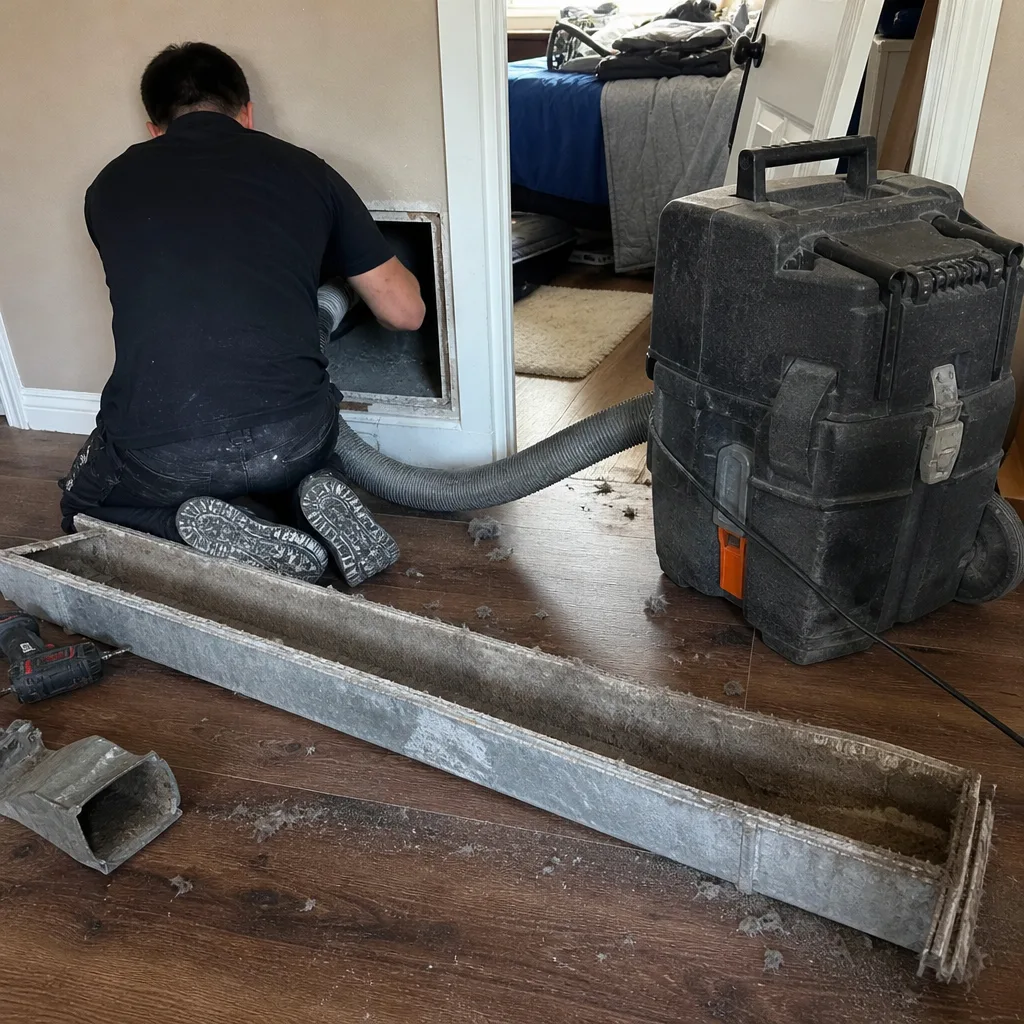 Before
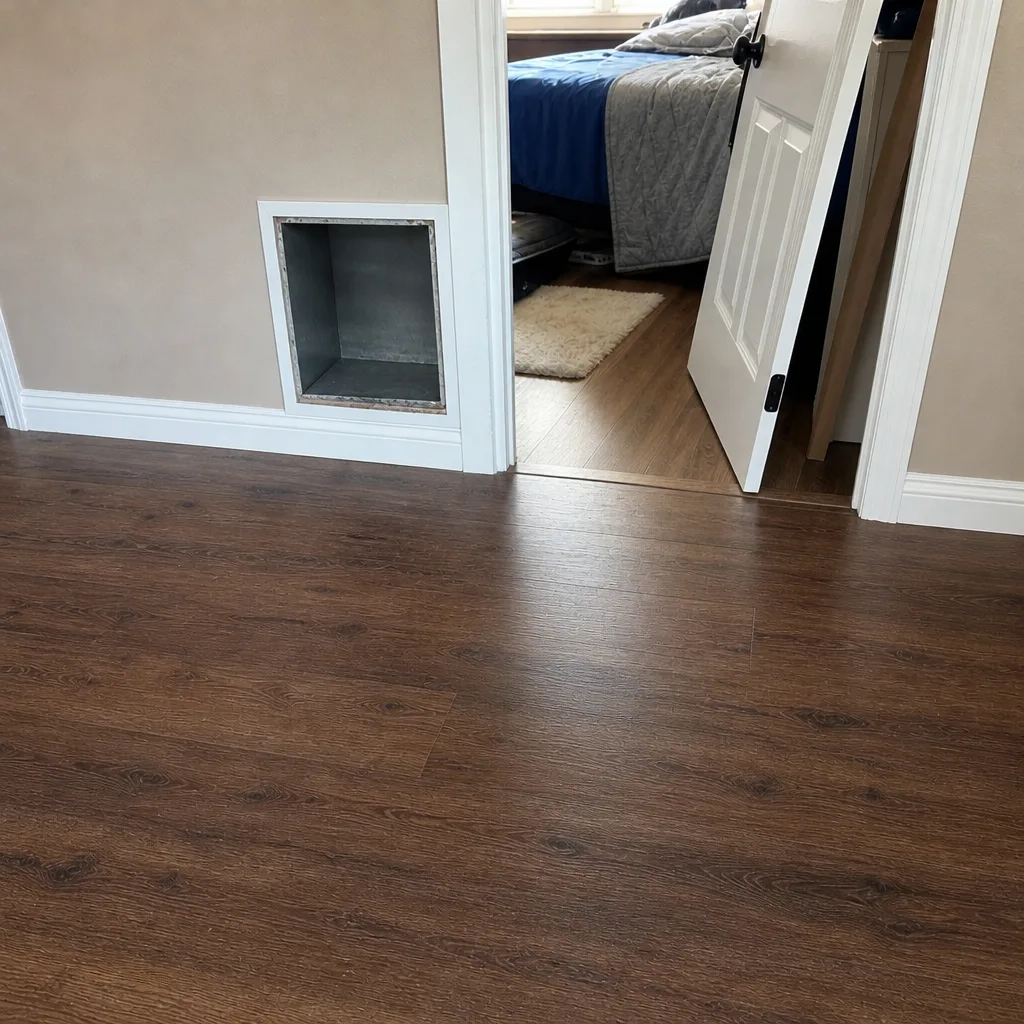 After
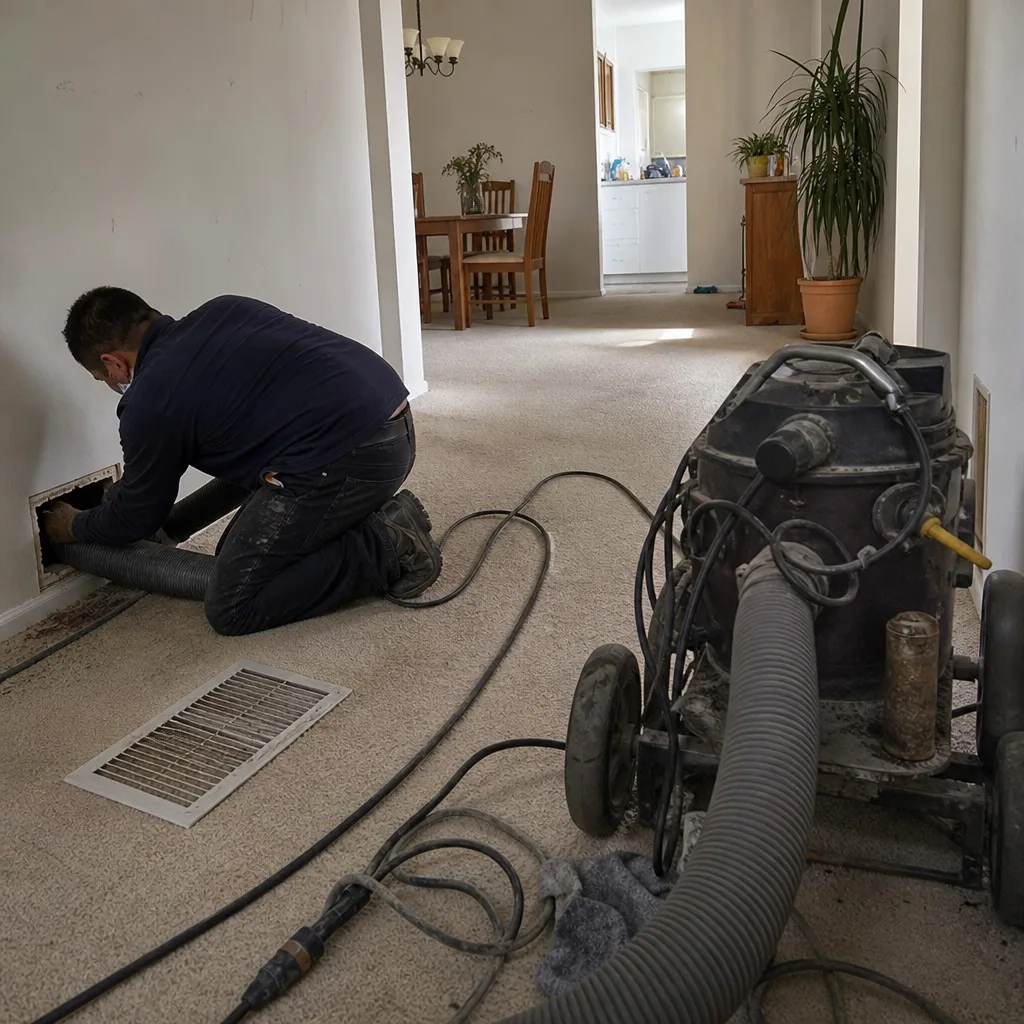 Before
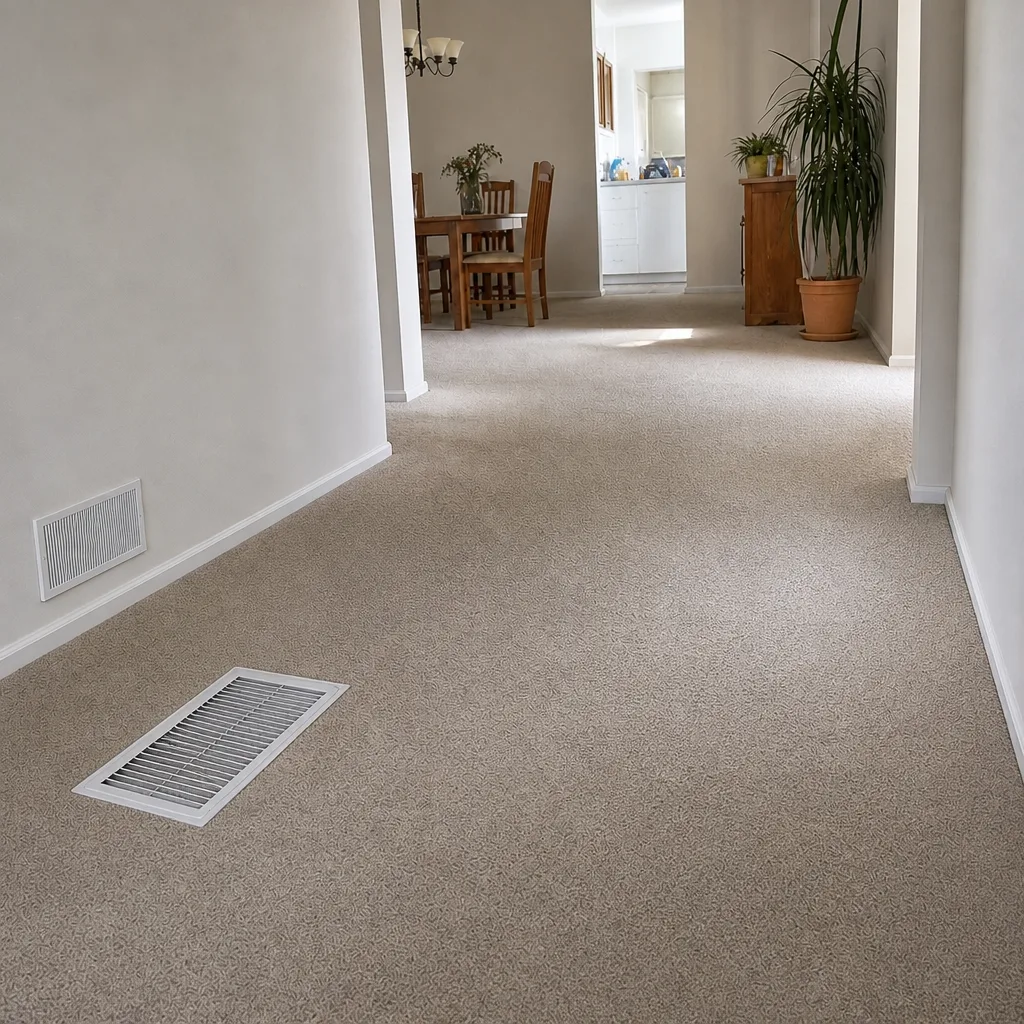 After
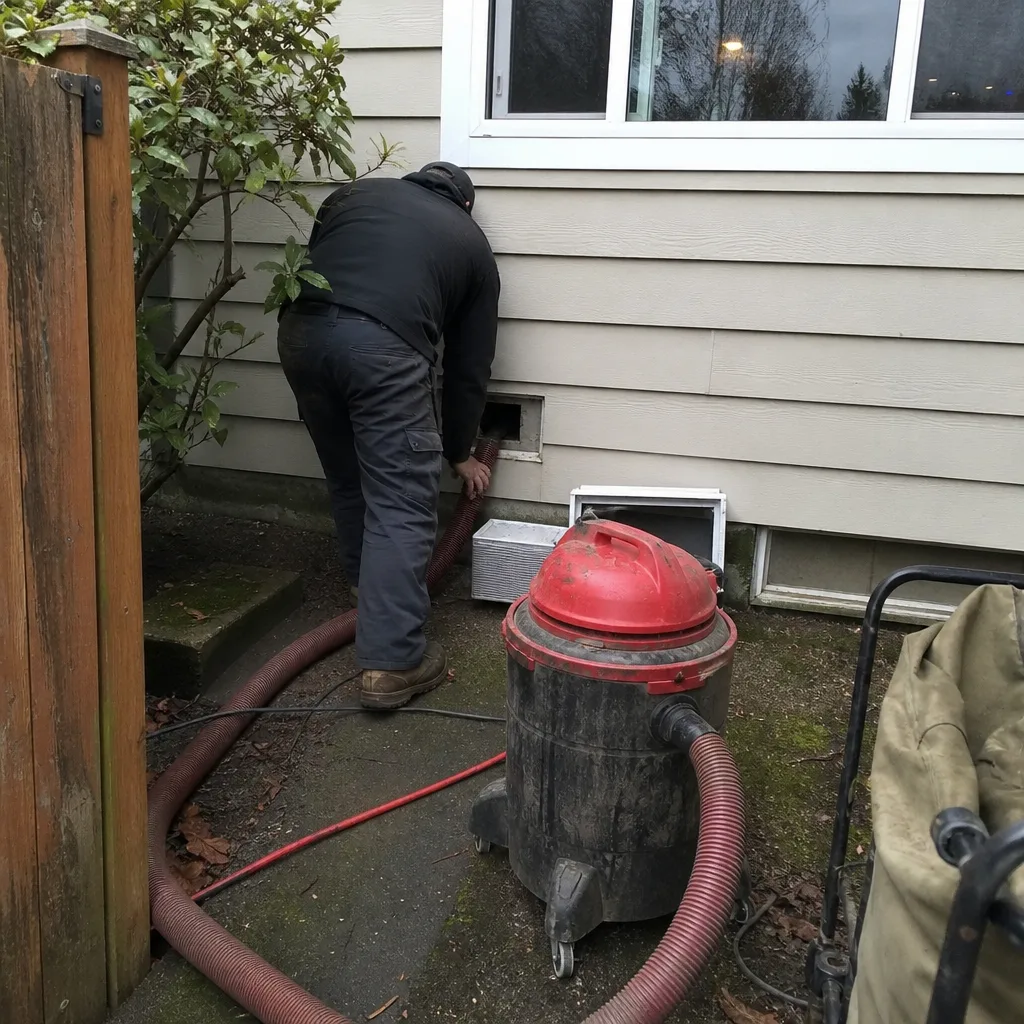 Before
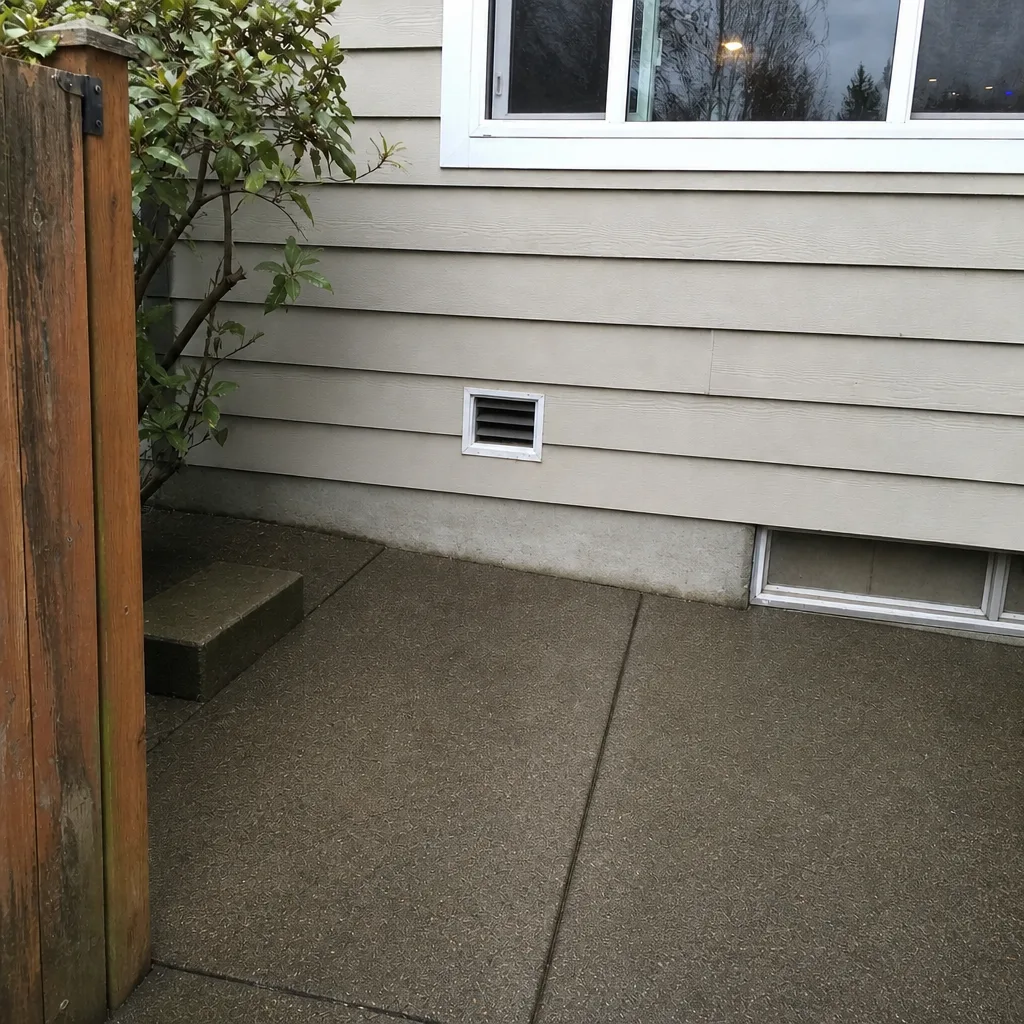 After
When to Call a Professional
Some maintenance is a homeowner’s job, and the checklist in this guide is meant to keep it that way. Other situations need a professional, and here’s where the line sits. Call a professional when you see biofilm rings, rust staining, or persistent damp conditions on your registers; when your humidity log stays above 60% through the wet months despite source-control fixes; when your dryer vent shows any of the warning signs in the section above, especially overheating; when you’re moving into a new Renton home and don’t know the duct history; when your home has just been through a renovation; and when your log shows you’re due for a scheduled cleaning and you want it done with the right equipment rather than consumer tools.
For those cases, expect a professional to explain their equipment and process. A specialist should be able to tell you what filtration system they’ll use, what system they’re cleaning with, and what your single flat price covers before any work starts. Before-and-after photos of your own ducts are the standard, not a special request.
Renton Air Duct Cleaning Co offers free estimates in Renton. Our technicians have up to 15 years of experience, we use Rotobrush and Nikro systems, and we deploy Abatement Technologies air-filtration on every job. Call (855) 337-1999 to book an estimate. We answer 24/7. Fast dispatch from 7am to 7pm, Sunday through Friday.
Frequently Asked Questions
Most Renton homes need professional duct cleaning every 3 to 5 years, with households that have pets, gas range cooking, or I-405 proximity trending toward 2 to 3 years. The schedule should follow what your monthly log shows rather than a fixed calendar. If registers show biofilm, rust, or damp debris, clean sooner regardless of the interval. Call (855) 337-1999 for an exact quote based on your home’s condition; estimates are free.
Check each register face for uniform dust, yellowish pollen residue, dark sticky biofilm rings, rust staining, or soot smudges at the edges. Biofilm and rust are the two signals that call for professional inspection rather than more cleaning. Uniform dust is normal and just needs to be logged and wiped. If you can’t tell what you’re looking at, photograph it and hand it to the technician at your next visit.
MERV 8 is the right starting point for a standard household with no pets and no freeway proximity, and MERV 11 is the right starting point for homes with pets, gas ranges in constant use, or proximity to the I-405 corridor. MERV 13 is a reasonable step up for households with asthma or allergy concerns, but check with whoever services your HVAC first, because higher MERV ratings increase pressure drop in systems not designed for them.
The safe band is 40 to 50% RH inside the home. Above 50% during the wet months means condensation can form on duct surfaces in unconditioned space, which creates the damp conditions mold and biofilm need. Below 40% is a comfort issue rather than a duct risk. Reading humidity monthly from November through March is the single most effective check for preventing duct mold problems in a Renton home.
The honest answer is that it depends on the number of systems, the number of registers, and the condition of the ductwork, and any company that quotes a flat per-vent price is likely to add charges once they’re on site. Ask for one flat price per system, agreed before work starts, and ask for before-and-after photos of your own ducts as proof of the work. Call (855) 337-1999 for a free estimate based on your specific home.
Lower quotes usually mean a smaller system, less filtration equipment, or a per-vent price that grows once the technician is on site. Consumer-grade equipment and shop-vac setups cost less and clean less. Professional systems like Rotobrush and Nikro, paired with Abatement Technologies air-filtration to capture dislodged contaminants, cost more to run and do a different job. If a quote is dramatically lower than the others, ask exactly what equipment will be used and what the final price will be in writing.
The Bottom Line
A Renton duct maintenance checklist works when it’s a log, not a chore list. Check your registers monthly and note what you see. Photograph everything on the same date each October, June, and September so you have comparable baselines. Read your humidity every month from November through March and keep it between 40 and 50% RH. Match your MERV rating to your specific household load rather than the generic shelf choice. Don’t skip the dryer vent, because lint is a fire risk with its own warning signs. And when the log tells you it’s time, work with a specialist who can show you their equipment and give you one flat price before they start. That’s the whole system, and it’s a system any homeowner can run.
If you’d rather have a professional walk you through your air pathway from end to end, Renton Air Duct Cleaning Co covers air duct cleaning, dryer vent cleaning, HVAC cleaning, duct repair and sealing, and air quality and sanitizing as one coordinated service. Call (855) 337-1999 for a free estimate. We answer 24/7. Fast dispatch from 7am to 7pm, Sunday through Friday.
Written by the team at Renton Air Duct Cleaning Co.